
Blogs

Author-focused insights on book promotion, visibility, and positioning to help you build trust, reach more readers, and support long-term sales growth.

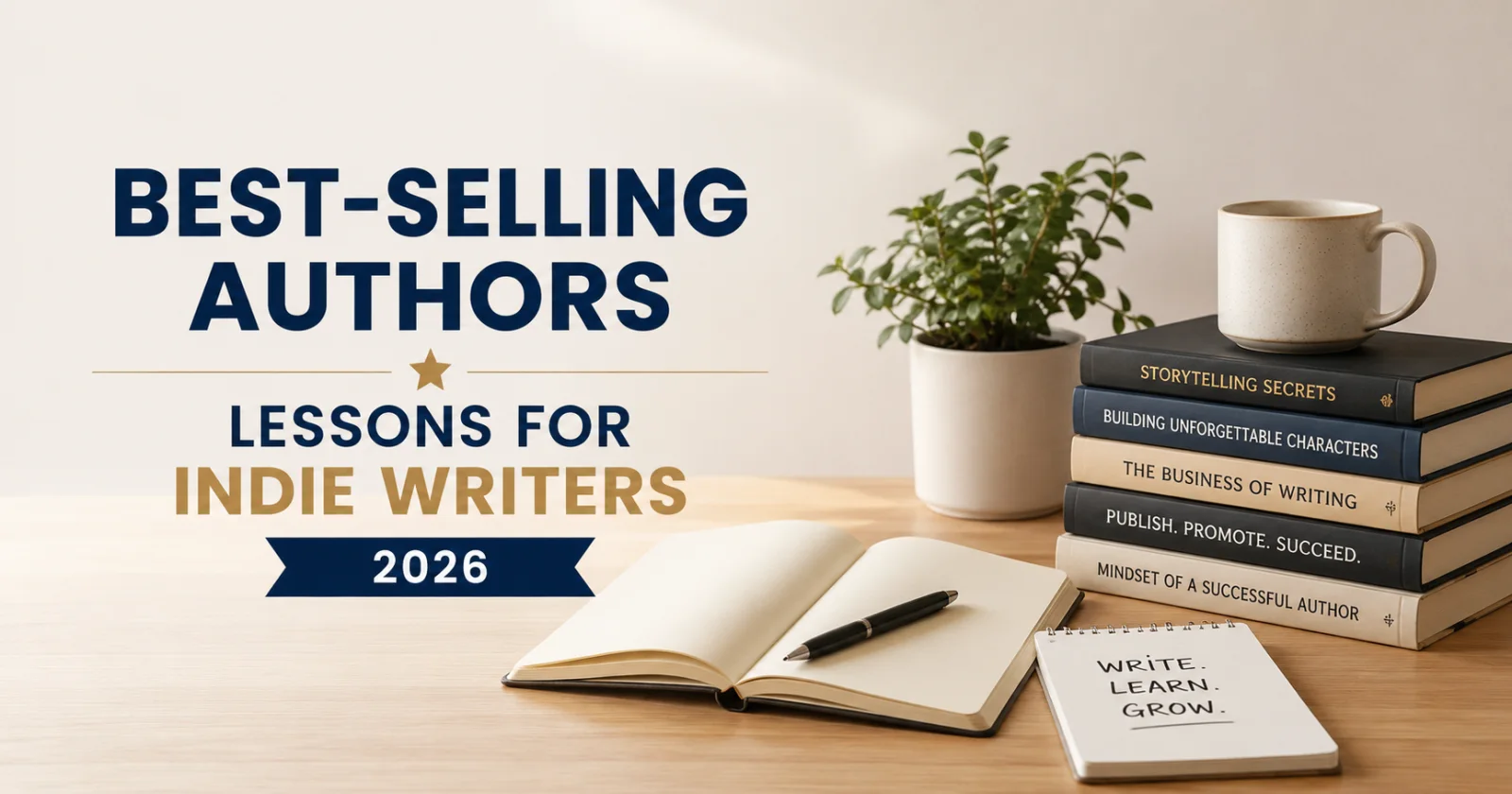
What Best Selling Authors Do Differently - And What Indie Authors Can Learn From It by KindleBookHub Team - Blog featured image
Blog

What Best Selling Authors Do Differently - And What Indie Authors Can Learn From It

James Patterson has published more than 220 novels. He has sold over 425 million copies worldwide. He holds the Guinness World Record for the most New York Times number-one bestsellers by a single author — 67 at last count. None of this happened because Patterson is a better prose stylist than his contemporaries. Literary critics have said so plainly for decades. It happened because Patterson understood something about being a best selling author that most writers never figure out: the book is only half the product. The reader's experience of finding it, deciding to start it, and being pushed toward the next one is the other half. He engineered that experience with as much deliberateness as he wrote the chapters. This matters to anyone who wants to understand what best selling authors actually do differently. The honest answer isn't the obvious one. It isn't that they write better. Some do. Some don't. It isn't that they got lucky, though luck plays a real role in timing. The answer is that the authors who consistently land on best seller lists — Amazon, New York Times, USA Today — have systems for promotion, reader acquisition, and visibility that most writers treat as secondary concerns, if they treat them at all. This guide looks at what those systems are, why they work, and what an indie author in 2026 can take from them — practically, not theoretically. 4B+ estimated copies sold by Agatha Christie — the best selling fiction author of all time 67 New York Times #1 bestsellers by James Patterson — a Guinness World Record 250 avg. lifetime copies sold by a self-published book with no active promotion Who Actually Makes the List of Best Selling Authors The list of best selling authors of all time looks different depending on how you count. By estimated total copies sold, the top names are Agatha Christie (over 4 billion), William Shakespeare (estimated 4 billion, though exact records don't exist), and J.K. Rowling (approximately 600 million). These are generational figures across more than a century of publishing. The comparison to a debut author launching today isn't particularly useful. More useful is the list of best selling authors working right now, in the 21st century, on the same platforms and within the same reader behaviors you're navigating. That list is dominated by a different set of names. James Patterson. Nora Roberts, who has published over 225 novels under two names and placed more than 200 on the New York Times list. Colleen Hoover, who went from self-published to New York Times best selling author in a trajectory that began on BookTok and surprised the entire traditional publishing industry. Stephen King, who has been on the list consistently since 1974 and who said, plainly, in his memoir "On Writing," that talent is common but discipline is rare. John Grisham, who publishes one legal thriller per year, every year, with no variation, and relies on the brand consistency of that schedule as much as any individual book. What these names share isn't genre. It isn't prose style. It isn't even sales volume, because the range between them is enormous. What they share is a relationship with readers that operates at scale and that they've maintained deliberately over long periods of time. The System Behind the Bestseller: What They're Actually Doing Nora Roberts publishes under two names — Nora Roberts for contemporary romance and J.D. Robb for the "In Death" crime series. The Robb series has run to over 50 books since 1995. Each book is written to be read as a standalone entry point and as a series continuation simultaneously. This structure isn't accidental. It's a reader acquisition and retention system. A reader who picks up book 14 of a 50-book series and enjoys it has 49 more books to buy. The series compound the value of acquiring any single reader exponentially. This is the first lesson that best selling authors consistently apply and most aspiring writers don't: think in series, not in books. A reader who finishes a standalone novel and wants more has nowhere to go. A reader who finishes book one of a trilogy goes immediately to book two. The act of writing series isn't just a narrative choice — it's the most effective reader retention tool in publishing, and it applies as directly to an indie author on Kindle as it does to a Roberts or Grisham. James Patterson co-authors with other writers, producing multiple books per year. His critics cite this as evidence of a factory model that prioritizes volume over quality. His readers don't seem to have received that memo. Patterson understood that reader attention is finite and competitive, and that the authors who occupy the most real estate in a reader's mind across the most titles are the authors that reader thinks of first when choosing what to read next. Volume is a visibility strategy, not just a production choice. Colleen Hoover is the most instructive case study for 2026, because her path looks nothing like the traditional publishing model. She self-published her first novel in 2012. She built a readership on social media. She was on BookTok — TikTok's book community — before traditional publishers came to her, not the other way around. When her backlist titles exploded in 2022, it wasn't because of a publisher's marketing campaign. It was because readers on BookTok recommended her books to other readers, and the social proof compounded until "Verity" and "It Ends with Us" were selling copies at a rate her original publisher hadn't anticipated for books that had been out for years. Her promotional infrastructure was reader-to-reader recommendation. She didn't manufacture it. She created the conditions for it by writing books readers felt compelled to discuss. What the New York Times Best Selling Author List Actually Measures Many writers treat the New York Times bestseller list as the definitive measure of literary quality or commercial success. It's neither. The list measures sales velocity in specific retail channels during a specific week. A book that sells 5,000 copies in seven days can reach the list in certain categories. A book that sells 50,000 copies over six months — more copies total — may never appear on it, because the velocity was spread too thin. Publishers and agents have known this for decades. Publishers Weekly covered it as far back as the 1990s: coordinated sales campaigns, bulk purchases by organizations, and release timing relative to competitive titles all affect list placement in ways entirely disconnected from the book's quality or long-term readership. The list is a marketing signal, not a quality signal. Appearing on it generates credibility that generates more sales, which is why publishers invest so heavily in the opening week of a release. For an indie author, the New York Times list is essentially unreachable through standard indie channels. The reporting retailers don't include Amazon in the weighted calculation, which means Kindle sales — where most indie revenue concentrates — count for less than sales through Barnes and Noble or independent bookstores. The list was not designed with indie authors in mind and doesn't reflect the market they're actually competing in. The Amazon best seller list is different. It measures actual sales velocity on Amazon in real time, updated hourly, and it includes Kindle ebooks. It's the ranking system indie authors can actually influence through promotion, because the books they're selling — ebooks on Amazon — are the books the list measures. An indie author who runs a well-coordinated launch promotion, builds review velocity, and sustains sales through targeted email blasts can genuinely reach category bestseller status on Amazon. This isn't the same credential as the Times list, but it's a credential that's visible to the readers browsing the category where the book lives. The Genre Patterns in Best Selling Fiction Authors The best selling fiction authors in any given year cluster in a small number of genres: thriller, crime, romance, and speculative fiction (fantasy and sci-fi). This pattern has held for decades and reflects something real about reader behavior. These genres have readers who consume multiple books per month, who actively seek out new authors within their preferred category, and who form communities — on Goodreads, on BookTok, in Facebook reader groups — where recommendations spread. The conditions for viral discovery exist more strongly in these genres than in others. Literary fiction, by contrast, produces occasional breakout commercial successes — Anthony Doerr's "All the Light We Cannot See," Hanya Yanagihara's "A Little Life" — but these are exceptions, and their commercial success typically required years of word-of-mouth before the sales numbers reflected critical reception. Literary fiction readers are real, passionate, and loyal. They're also less numerous than thriller or romance readers, and their discovery patterns are slower. This isn't a judgment on the writing — it's a description of the market. For an indie author trying to understand where best selling author status is achievable in their career, genre is the most honest starting variable. A debut thriller in a well-executed series has a more realistic path to Amazon category bestseller status than a debut literary novel, not because the thriller is better written, but because the audience is larger, more concentrated on the platforms where indie books compete, and more likely to leave reviews, recommend to friends, and pick up the sequel. Promotion Habits of Authors Who Reach and Stay on Best Seller Lists The authors who appear on the Amazon best sellers list in Kindle categories, staying visible across months rather than just one launch week, — share a specific set of promotion behaviors. These aren't secrets. They're documented across the self-publishing community, in author forums, in data published by Written Word Media, and in the observable pattern of which indie authors build sustainable careers and which ones spike once and disappear. They coordinate their launch week. A book that sells 300 copies in its first week and 20 copies in each of the following ten weeks accumulates 500 total sales with minimal algorithmic attention. A book that sells 500 copies in its first week — through coordinated email promotion, social media visibility, and review seeding — tells Amazon's algorithm that this book is performing at a rate worth amplifying. The algorithm responds by placing the book in also-bought recommendations and search results. Those placements generate organic sales the author didn't pay for. The first-week investment produces a return that compounds. They build their review count before promoting broadly. A targeted email blast to 20,000 genre readers sent to a book with three reviews converts at a fraction of the rate of the same blast sent to the same book with 25 reviews. Social proof at the point of landing is the conversion factor. Best selling indie authors systematically run Advance Review Copy campaigns before launch, reaching genre readers who will finish the book and leave honest feedback. KindleBookHub's genre-matched promotion service connects authors with verified readers in their specific category — thriller readers for thrillers, romance readers for romance — who have a history of completing books and posting reviews. They use targeted email over broad social media. Colleen Hoover's BookTok success is the outlier, not the model. For most best selling indie authors, the highest-converting promotion channel is a genre-specific email newsletter reaching readers who opted in specifically to receive book recommendations in that category. Written Word Media's 2024 reader survey found that 74% of active ebook readers discovered their last purchase through a recommendation: primarily newsletter, then social. A reader who opens a genre newsletter is in book-buying mode. They're not multitasking through a social feed. The intent gap between those two contexts is where email promotion earns its conversion premium. They treat promotion as a quarterly practice, not a launch event. The authors who sustain visibility on the Amazon best seller list in their category don't promote once at launch and then wait for organic discovery. They run coordinated promotions every two to three months — smaller than the launch push, targeted at maintaining sales velocity and review accumulation. A book that launched six months ago with thirty reviews can be relaunched into new visibility with a Kindle Countdown Deal timed to a targeted email blast. The algorithm treats this activity as renewed demand and adjusts the book's recommended placement accordingly. What Kindle Best Sellers Have That Most Indie Books Don't Browse the Kindle best sellers list in any active category — thriller, romance, cozy mystery, fantasy — and you'll notice specific patterns in the books that hold their position week over week. These patterns aren't coincidences. Their covers signal genre within half a second. Not "suggest" genre. Signal it clearly, using the color temperature, typography, and imagery conventions that genre readers have been trained to recognize across thousands of books. A cover that requires the reader to read the title and description before they understand what kind of book it is has already lost that reader to the cover next to it that communicated the genre instantly. Their descriptions lead with emotional promise, not plot summary. The opening line of a Kindle bestseller description names the feeling the reader is buying — the feeling of not knowing who to trust, the feeling of falling in love against better judgment, the feeling of a mystery that refuses to resolve until the last page. It doesn't describe the setup. It promises the experience. Most indie book descriptions do the opposite. They have review counts that signal safety. Twenty-five or more reviews is the threshold where Amazon's algorithm begins recommending a book proactively in also-bought and "customers also viewed" placements. Below that threshold, the algorithm doesn't have enough data to know which readers to show the book to. The Kindle best sellers list in any category is populated almost entirely by books with at least 50 reviews. This isn't because reviews cause bestsellers. It's because the authors who reach that review threshold got there by running the coordinated ARC and promotion campaigns that also drove the launch sales that got the algorithm's attention in the first place. The reviews and the sales are both outputs of the same underlying promotion system. The Series Advantage: Why Best Selling Authors Build Worlds, Not Books Of the top 20 best selling authors of all time in genre fiction, the majority built their careers on series rather than standalones. Christie had Poirot and Miss Marple. Patterson has Alex Cross and the Women's Murder Club. Roberts has the "In Death" series. Grisham's legal thrillers are technically standalones, but they share a universe of recurring settings and character types that function as a soft series — readers who love one tend to consume all of them. The series advantage works through compounding reader acquisition. Every new reader who discovers book one is a potential buyer of books two through ten. An author with a three-book series who acquires 1,000 new readers through promotion has potentially sold 3,000 books from that single promotion event — one to each new reader immediately and two more over the following months as those readers continue the series. An author with a standalone novel who acquires 1,000 new readers from the same promotion has sold 1,000 books and then must find 1,000 new readers to generate the next 1,000 sales. This is why the economics of being a best selling author look more achievable than they initially appear. The investment in acquiring a reader pays forward across every subsequent book they buy. The authors who build sustainable bestseller status are primarily authors who write series, because series turn reader acquisition cost from a per-book expense into a per-reader investment that returns value indefinitely. For an indie author planning their first series: the first book is the loss leader. Price it lower than the subsequent books. Promote it aggressively. Get it into as many hands as possible through targeted genre promotion. The revenue comes from books two through however many you write. The readers you acquire through coordinated first-book promotion become the core audience for every book you publish afterward — and that audience, once built, costs you nothing to reach again. Best Selling Authors in the 21st Century: What Changed After 2010 The list of best selling authors in the 21st century looks different from the previous century's list in one significant way: it includes names who bypassed traditional publishing entirely or who used self-publishing as a launchpad before traditional publishers came to them. E.L. James began as fan fiction posted online. Andy Weir self-published "The Martian" on his personal website before a literary agent found it and sold it to Crown. Hugh Howey's "Wool" sold millions of copies as a Kindle self-published ebook before Simon and Schuster acquired the print rights. The structural change that made this possible is straightforward. Amazon's Kindle Direct Publishing, launched in 2007, gave any author direct access to the largest ebook marketplace in the world without requiring a publisher's approval or distribution network. The traditional publishing gatekeeping functionbecame optional rather than mandatory. A book could reach readers directly through Kindle on the day the author chose to publish it. This created the conditions in which a self-published author could become a best selling author without ever signing a traditional publishing contract. Colleen Hoover did it. Lindsay Buroker has sold millions of fantasy ebooks through KDP. Mark Dawson built a thriller series that generates millions annually through Kindle Unlimited without traditional distribution. These aren't exceptions anymore. They're the documented trajectory of authors who combined strong writing with systematic promotion. The difference between these authors and the vast majority of indie authors who self-publish and sell fewer than 250 copies is not the quality of the writing. It is the presence or absence of a promotion system that reaches genre readers consistently, builds review velocity, and maintains algorithmic visibility on the platforms where readers actually buy books. What Indie Authors Can Take From Best Selling Author Habits — Specifically The gap between "best selling author" and "self-published author with 80 lifetime sales" is not primarily a gap in talent. It's a gap in systems. Specific systems. The following are the ones that appear consistently in the careers of indie authors who build toward sustained bestseller status in their category. A genre-matched reader email list started before the first launch. Every best selling indie author who has documented their growth process mentions the email list as the foundation everything else rests on. Not a social following. An email list of readers who've opted in specifically because they want books in your genre. This list is the asset that makes every future launch cheaper and more effective than the last, because you're not starting from zero each time. An ARC program that builds reviews before launch day. Arriving at launch day with fifteen or more reviews already posted means Amazon's algorithm has something to work with from the first sale. It means browsers who find the book through promotion see social proof rather than emptiness. It means the conversion rate from promotional traffic is higher than it would be on a bare page. The authors who reach the Amazon best sellers list in their category almost universally have review counts in place before their launch promotion runs. KindleBookHub's review campaign service connects authors with genre-verified readers who have a documented history of finishing and reviewing books in the target category. Coordinated launch-week promotion across multiple channels simultaneously. The authors who hit bestseller status at launch — appearing in their category's top twenty within the first week — are running email promotion, social promotion, and ARC review accumulation simultaneously rather than sequentially. The simultaneous velocity signals Amazon's algorithm more powerfully than the same total promotional reach spread across weeks. A book that sells 400 copies in seven days looks different to the algorithm than a book that sells 400 copies across 30 days, even though the total is identical. Quarterly backlist promotion as standard practice. The authors who stay on the Kindle best sellers list in their category don't promote only at launch. They run smaller coordinated promotions on older titles every two to three months: a Kindle Countdown Deal timed to a targeted email blast, a social push timed to a relevant moment in the genre calendar. This activity maintains review velocity, refreshes the algorithm's interest in the title, and compounds the original reader acquisition over time. KindleBookHub's promotion packages are designed specifically for this kind of ongoing maintenance promotion, not just launch events. The Counter-Argument: Does Any of This Apply If the Writing Isn't Strong Enough? The obvious pushback: if the writing isn't good enough, no amount of promotion will produce a best selling author. This is true. It requires saying clearly because the opposite is also said too often — that writing quality is the only variable that matters and promotion is secondary or crass. Both versions are incomplete. The more precise answer is that promotion determines whether readers find the book. Writing quality determines whether those readers finish it, review it, and recommend it to other readers. Without promotion, strong writing reaches almost no one. Without strong writing, promotion produces one-time buyers who don't return, reviews that warn other readers away, and an author reputation that decays rather than compounds. The best selling authors who sustain their position over years — not just one breakout book — consistently have both. The writing earns the reader's loyalty. The promotion system earns the reader in the first place. Treating them as competing priorities rather than complementary ones is the mistake that keeps most authors from building toward either goal effectively. There is also the uncomfortable reality that "good enough" is a lower bar than most writers imagine before they're published and a higher bar than most writers set for themselves after. The genre fiction market rewards books that deliver the genre experience reliably and consistently. A thriller that frightens, a romance that satisfies, a mystery that resolves fairly. These are the standards readers apply. Literary ambition that interferes with genre delivery is not rewarded by genre readers, regardless of its critical merit. The best selling thriller authors write books that thriller readers want to read, which is different from books that literary critics want to admire. Frequently Asked Questions Who is the best selling author of all time? Agatha Christie is the best selling fiction author of all time, with an estimated 4 billion copies sold across more than 80 novels and story collections. William Shakespeare holds a similar estimated total when all published editions and translations are counted, though exact records from the 16th and 17th centuries don't exist. Among living authors, James Patterson holds the Guinness World Record for the most New York Times number-one bestsellers, with 67 as of 2025. Can an indie author become a best selling author without a traditional publisher? Yes. Amazon's best seller lists, including the Kindle best sellers list, measure actual sales velocity on Amazon and include self-published ebooks. An indie author who builds coordinated launch-week promotion, accumulates reviews through ARC campaigns, and maintains visibility through quarterly promotional pushes can reach category bestseller status on Amazon without a traditional publisher. Andy Weir, Colleen Hoover (before her traditional deal), and Hugh Howey all built best selling careers through self-publishing before traditional publishers offered them contracts. What is the difference between the New York Times best seller list and the Amazon best seller list? The New York Times list measures weekly sales velocity across a specific set of reporting retailers, weighted by outlet type. It does not include Amazon sales in its primary calculation, which means Kindle ebook sales — where most indie author revenue concentrates — count for significantly less than print sales through traditional bookstore channels. The Amazon best seller list measures actual hourly sales velocity on Amazon directly and includes Kindle ebooks. For indie authors selling primarily through Amazon, the Amazon list is the more relevant ranking and the more achievable target. How many books do best selling authors publish per year? It varies significantly. James Patterson publishes 10 to 15 books per year through co-authorship. Nora Roberts publishes two to four books per year under her two names. John Grisham publishes one book per year. Stephen King publishes one to two per year. Among successful indie authors, the most productive publish four to six books per year, particularly in series, because each new release in a series promotes all previous titles to the new readers it acquires. Most sustainable indie careers are built on two to four books per year across a series rather than one standalone per year. What genres produce the most best selling authors? Thriller, crime, romance, and speculative fiction (fantasy and science fiction) consistently produce the most commercially successful authors in both traditional and indie publishing. These genres share a reader base that consumes multiple books per month, forms active recommendation communities online, and responds strongly to series. Romance is the single largest genre in ebook sales, and the Kindle Unlimited subscriber base skews heavily toward romance and thriller readers, making these genres particularly well-suited to KDP Select enrollment and the promotional tools it provides. The Distance Between Where You Are and the Kindle Best Sellers List The gap is specific. Not mystical. Not primarily a function of talent. It's a function of review count, launch coordination, genre-matched promotion, and whether you treat your book's release as an event the reading community participates in or a file you uploaded and waited to be discovered. The best selling authors of all time: Christie, Patterson, King, Roberts — operated in publishing eras where the promotional infrastructure looked nothing like 2026's. They didn't have Kindle. They didn't have BookTok. They had print-only distribution, limited retail shelf space, and reader access constrained entirely by what physical stores decided to stock. The constraint was worse. The tools were fewer. They still built careers that produced hundreds of millions of readers. The tools available to an indie author in 2026 are better than anything those authors had. Direct access to readers through Amazon. Email lists that bypass every retail gatekeeping function. Social reading communities where a single recommendation from the right account can send a thousand readers to your book page in 24 hours. Genre-specific promotion services that reach readers who are actively looking for their next book in exactly your category. What's required is using them deliberately rather than hoping discovery happens on its own. It doesn't happen on its own. Not for the bestsellers. Not for anyone. If you're at the stage of building that promotion system — an email list, a review foundation, a coordinated launch plan — KindleBookHub's promotion packages cover the parts that require an existing audience you don't yet have: genre-targeted email blasts, social promotion to 200,000+ active readers, and review campaigns that reach genre-verified readers in your specific category. The email list you build over time. The first-book visibility you can buy, precisely and without blanket blasting, starting now. Related reading: How to Promote Your Kindle Book and Actually Get Sales: The 2026 Guide Related reading: KDP Select in 2026: Is It Worth It for Indie Authors?

KDP Select in 2026: Is It Worth It for Indie Authors? by Oliver Grant - Blog featured image
Blog

KDP Select in 2026: Is It Worth It for Indie Authors?

In the spring of 2023, a first-time thriller author named Marcus enrolled his debut novel in KDP Select on launch day without knowing exactly what he was agreeing to. He understood the 90-day exclusivity clause in the abstract. What he didn't understand was that enrolling also meant opting into Kindle Unlimited, giving his book's pages a per-page royalty rate instead of a per-sale one, and committing to a promotion window strategy he hadn't yet planned. Six months later, he described the decision this way: "I left money on the table on both sides. I used the free days wrong, I priced wrong, and I had no idea KENP existed." KENP stands for Kindle Edition Normalized Pages — the unit Amazon uses to calculate what Unlimited subscribers earn their authors. Most authors enrolling for the first time don't know the word. KDP Select is the single most misunderstood enrollment decision in self-publishing. Not because it's complicated — the mechanics are straightforward — but because authors make the decision based on incomplete information, usually under the pressure of a launch timeline, and then live with the consequences for 90 days at a time. This guide covers what KDP Select actually is, what you give up and what you gain, how the royalty math works in practice, and the conditions under which enrolling is the right call and the conditions under which it isn't. What KDP Select Actually Is (And What Most Guides Get Wrong) KDP Select is an optional enrollment program that Amazon offers to authors publishing through Kindle Direct Publishing. Enrolling a title in KDP Select does two things simultaneously. It makes the book available to Kindle Unlimited subscribers, who can read it as part of their $9.99 monthly subscription. And it grants Amazon exclusive digital distribution rights for that title for 90 days. The ebook cannot be sold or offered for free anywhere else during that period. No Apple Books. No Kobo. No Barnes and Noble. No Smashwords. No author website. Amazon only. In exchange for that exclusivity, authors get access to three things they don't have outside KDP Select: Kindle Unlimited royalties (paid per page read, not per sale), Kindle Countdown Deals (temporary price promotions that display a countdown timer on the book's Amazon page), and KDP Free Days (five days per 90-day enrollment period during which the book can be offered at no cost). What most guides get wrong: they treat KDP Select as a binary question — "worth it or not?" The question isn't binary. It's conditional. KDP Select is worth it when the royalties from Kindle Unlimited pages exceed the revenue lost from other retailers, when you can use the promotional tools effectively, and when your genre's readership skews toward Kindle Unlimited subscribers. It isn't worth it when your readers are distributed across platforms, when you have an established sales presence elsewhere, or when you can't run a promotion that justifies the free-day opportunity cost. The Kindle Unlimited Royalty: How KENP Actually Works When a Kindle Unlimited subscriber reads your book, Amazon pays you based on the number of pages they read, not based on whether they finish the book or what they paid for their subscription. The per-page rate comes from a global fund Amazon allocates monthly. Authors as a group share that fund in proportion to the total pages read across all KU titles. The rate fluctuates monthly. In 2024 and early 2025, the KENP (Kindle Edition Normalized Pages) rate held between $0.0045 and $0.0050 per page. (Kindlepreneur tracks this monthly.) The practical math: a 300-page novel read to completion by a Kindle Unlimited subscriber earns approximately $1.35 to $1.50. At a $3.99 sale price with the 70% royalty rate, the same book earns $2.79 per sale. For KENP to match a direct sale, a 300-page book needs roughly two readers to each read the full book. That math favors KDP Select when your book gets high completion rates from KU subscribers, and it works against you when readers sample your book and stop. A book that gets opened and read to 40% completion earns about $0.60 in KENP — less than a quarter of a direct sale. Genre matters significantly here. Romance, thriller, and cozy mystery readers in Kindle Unlimited tend to be high-completion readers who binge series. Literary fiction and standalone novels see lower completion rates and correspondingly lower per-reader KENP earnings. One piece of data most authors don't see until after enrollment: you can monitor KENP performance in your KDP dashboard under the "Reports" tab, where you'll see pages read by title. This is the most useful metric for deciding whether to renew enrollment. If your KENP earnings per title per month are exceeding what you'd reasonably expect from that title on other platforms, renewal makes financial sense. KDP Free Days: The Tool That Works Exactly Once Per 90 Days Each KDP Select enrollment period includes five days you can designate as free days — days when your book is available to anyone at no cost, whether or not they subscribe to Kindle Unlimited. This sounds like giving away your product. The reason authors use free days deliberately is that a well-promoted free day generates download volume that Amazon's algorithm reads as reader interest, which improves the book's ranking in its category, which produces organic visibility in the paid chart when the free period ends. The sequence matters. A free day with no external promotion produces a few hundred downloads from readers who are downloading dozens of free books simultaneously and will read approximately none of them. The review conversion rate from undiscriminating mass downloaders is near zero. The ranking improvement is minimal. You gave away copies and received nothing in return. A free day with coordinated promotion works differently. Submitting your free-day period to genre-specific book promotion newsletters — services that reach readers actively looking for free titles in your genre — drives several thousand downloads concentrated in a 24 to 48 hour window. Amazon's algorithm treats that velocity spike as a demand signal. The book rises in the free chart. Some of those readers actually read the book. Reviews follow. When the paid period resumes, the book enters it with more reviews and better algorithmic positioning than it had before the free day ran. The authors who see lasting results from free days combine their KDP Select enrollment with a promotion service that reaches actual genre readers rather than general free-book hunters. KindleBookHub's free day promotion service reaches genre-segmented readers — thriller readers for thrillers, romance readers for romance — who have a history of reading what they download. The download-to-review conversion rate from targeted genre audiences is meaningfully higher than from general free-book newsletter audiences, because genre readers who chose your category specifically are far more likely to finish a book they started. One timing constraint worth knowing: Amazon requires you to schedule your free days through the KDP dashboard at least one day before they run. The most effective free day windows are Tuesday through Thursday. Weekend free days underperform for review conversion because Amazon's review moderation cycles run on a workweek schedule and weekend downloads convert to reviews more slowly. Kindle Countdown Deals: The Underused Alternative to Free Days The second promotional tool KDP Select provides is the Kindle Countdown Deal. A Countdown Deal lets you temporarily reduce your book's price — from your regular price down to as low as $0.99 — while displaying a countdown timer on the book's Amazon product page that shows how many hours remain at the discounted price. The timer creates urgency that free promotions can't create. A free book generates no revenue. A book at $0.99 during a Countdown Deal still generates $0.35 per copy under the 35% royalty rate, but more usefully, it allows authors whose books are priced in the $2.99 to $9.99 range to maintain the 70% royalty rate even during the deal. Amazon retains the 70% royalty on Countdown Deal prices when the book's regular price qualifies for it. This is the mechanical advantage: a temporary $0.99 price during a Countdown Deal earns $0.35 rather than the $0.70 you'd normally expect at $0.99 outside of a deal, but it also earns the 70% rate on prices above $0.99 — so a brief $1.99 Countdown earns $1.40 rather than the $0.69 it would outside the deal framework. Countdown Deals work best when combined with email promotion to genre readers who respond to limited-time urgency. A Countdown Deal with no promotion is a price drop nobody sees. A Countdown Deal promoted through a targeted email blast — reaching readers who've been considering the genre and are now given a time-limited reason to act — converts meaningfully better than either a permanent price drop or an unpromoted free day. The deadline visible on the product page does real work on reader psychology that a standard price drop doesn't replicate. KDP Select vs. Going Wide: The Actual Decision Framework Going wide means distributing your ebook to all available retail platforms — Amazon, Apple Books, Kobo, Barnes and Noble, Google Play, libraries through OverDrive and Hoopla — rather than restricting to Amazon exclusively. The Alliance of Independent Authors (ALLi) publishes annual data on platform revenue distribution for indie authors. In their 2024 survey, authors who went wide reported that Amazon still accounted for an average of 67% of their ebook revenue, with Apple Books at roughly 15% and Kobo at 10%. The remaining platforms split the last 8%. This data means that for most authors, the revenue outside Amazon is real but secondary. KDP Select's exclusivity costs you access to approximately 33% of your potential ebook market — if that 33% has been developed. The "if" is doing significant work in that sentence. An author who has never distributed outside Amazon and has no readership on other platforms sacrifices effectively nothing by enrolling in KDP Select, because the 33% of revenue they're "giving up" was theoretical rather than actual. An author with 500 Kobo readers who've been buying every release sacrifices something real. The honest framework for making the decision: Enroll in KDP Select when your genre has strong Kindle Unlimited readership (romance, thriller, cozy mystery, sci-fi, fantasy are the core KU genres), when you're launching a first book with no established readership on other platforms, when your priority is building algorithmic visibility on Amazon over the next 90 days, or when you plan to run coordinated free-day promotions that require the exclusive promotional windows KDP Select provides. Don't enroll in KDP Select when you have an established reader base on other platforms, when your genre skews toward Apple Books or Kobo audiences (literary fiction, certain non-fiction categories, international romance), when you've committed to a library distribution strategy that requires non-exclusive rights, or when you're planning to bundle your book with other authors' work in promotional box sets that require multi-platform availability. The 90-day commitment is the key constraint. If you enroll and then decide KDP Select isn't working for your title, you serve out the current 90-day period before you can distribute elsewhere. There's no early exit. Build your decision around the 90-day window, not an indefinite future. $0.0047 avg. KENP rate per page read in Kindle Unlimited (early 2025) 90 days minimum exclusivity per KDP Select enrollment period 5 free promotion days available per 90-day enrollment period Genre by Genre: Where KDP Select Works and Where It Doesn't Not every genre has the same Kindle Unlimited readership density. The following breakdown reflects what the data from authors reporting their KU vs. wide earnings consistently shows. Romance (all subgenres): KDP Select is almost universally the right choice for debut romance authors. Kindle Unlimited has a large, loyal, high-volume romance readership. Romance readers in KU tend to read three to five books per week. Completion rates are high. KENP earnings for a 250-page romance novel read by an active KU subscriber regularly exceed what the same author would earn from a $3.99 sale on a competing platform. Series work particularly well because KU subscribers who read book one often move immediately to book two. If both are in KDP Select, the series earns KENP on every volume without requiring the reader to make a separate purchase decision. Thriller and Mystery: Strong KU readership, particularly for fast-paced commercial thrillers in the Lee Child and James Patterson mold. Psychological thrillers and cozy mysteries perform especially well in KU because readers in these subgenres tend to binge. Legal thrillers and slow-burn literary crime fiction perform less consistently — the readership is there, but completion rates are lower and the readers are more likely to own rather than subscribe. Science Fiction and Fantasy: Mixed. Epic fantasy series do very well in KU — the completion rates on long series with committed fans are high, and the series structure means KENP compounds across multiple volumes. Standalone literary speculative fiction underperforms in KU relative to what the same author might earn on Apple Books, where the literary spec fic readership is stronger. Non-fiction: Generally weak for KDP Select unless the non-fiction is in a category with high Amazon-first readership (certain personal finance categories, some health and fitness). Business and professional non-fiction readers skew toward other platforms and toward print rather than ebook. Most non-fiction authors who go wide report that the Apple Books and Kobo revenue is proportionally higher for their category than the aggregate data suggests — the aggregate includes a lot of romance and thriller, which inflates Amazon's share. Non-fiction authors should evaluate their specific category rather than relying on genre-wide averages. The Renewal Decision: How to Evaluate After the First 90 Days Most KDP Select guidance focuses on the enrollment decision. The renewal decision: what to do when the 90 days end — is equally important and receives far less attention. To evaluate renewal, pull three numbers from your KDP dashboard. First, the total KENP pages read during the period. Multiply by the current KENP rate (check Kindlepreneur's monthly tracker for the most recent figure) to get your Kindle Unlimited earnings for the period. Second, the total units sold at full price, multiplied by your per-sale royalty, to get your direct sale revenue. Third, the downloads generated during any free-day promotions you ran, and the number of reviews added during and after those promotions. If your KENP earnings are substantial and your free-day promotions generated measurable review gains and ranking improvements, renewal is straightforward. If your KENP earnings are minimal and you ran no effective free-day promotions, you're getting exclusivity's downside with none of its benefits. Non-renewing in that case and distributing to other platforms is the correct move. The condition that makes renewal worth reconsidering even when KENP is low: if you're planning a significant promotional push in the next 90 days and want the free-day and Countdown Deal windows available, renewing for one more period while you run that promotion is defensible. The promotional tools in KDP Select are only useful if you use them. If you've had an enrollment period with no promotions and low KENP, the question isn't whether KDP Select is working — it's whether you've used what KDP Select provides. Common KDP Select Mistakes and the Specific Damage They Do Enrolling without checking auto-renewal. KDP Select auto-renews by default. Authors who enroll once and forget the setting sometimes discover they've been in KDP Select for 18 months without intending to continue beyond the first period. Check your KDP dashboard's "KDP Select" tab for each enrolled title and confirm the auto-renewal setting matches your intention. The setting can be changed at any time, but only takes effect at the end of the current enrollment period. Running free days without external promotion. Every guide says this. Authors keep doing it. A free day with no promotion outside Amazon's own ecosystem produces downloads from people browsing the free charts who are downloading everything listed. These downloaders don't read what they download. Review conversion is near zero. The ranking improvement is minimal and decays within days. Free days require an external promotion to deliver value. Specifically, a promotion that reaches genre readers who are actively looking for a book like yours. The free day is the window. The promotion is what you put through it. Using all five free days at once on the first enrollment. Five consecutive free days generate higher total download volume than five spread-out single days, but they also burn through the entire promotional budget in one push. Authors who spread free days: two on a first push, three on a second push two months later. This generates two ranking events instead of one, two waves of reviews instead of one, and two occasions on which the algorithm registers strong demand signals. One large spike that decays is less valuable than two moderate spikes that maintain the book's visibility across the full enrollment period. Pricing the book at $0.99 or $1.99 before running a Countdown Deal. Kindle Countdown Deals require the book's regular price to be at $2.99 or above. Authors who launch at $0.99 "to drive initial volume" and then want to run a Countdown Deal discover they can't — the deal structure requires a price that has room to discount from. Launch at $2.99 minimum if you're planning Countdown Deal promotions. The lower launch price gains very little in volume that $2.99 doesn't also capture, and it locks you out of the Countdown tool. Not monitoring KENP by title. Authors who enroll multiple books in KDP Select without tracking which titles are generating KENP earnings and which aren't are flying blind on the renewal decision. One title might be generating 80% of all KENP earnings. Renewing that title makes clear sense. Renewing the other four titles might not. KDP Select is worth running as an individual title evaluation, not as a blanket policy applied to everything in a catalog. KDP Select and Amazon Advertising: The Interaction Most Authors Miss Amazon's advertising platform treats KDP Select books differently from non-enrolled titles in one meaningful way: KDP Select books display the Kindle Unlimited badge on their Amazon product page, which signals to KU subscribers that reading this book costs them nothing beyond their existing subscription. For a browser who's deciding between two comparable thrillers: one with the KU badge and one without — the KU badge is a conversion advantage. It removes the purchase decision entirely for subscribers. This means Amazon ads for KDP Select titles convert at a higher rate from KU subscribers, because the barrier to clicking "Read for Free" is lower than the barrier to clicking "Buy for $3.99." The effective cost per acquisition through Amazon advertising is lower for KDP Select titles when a significant portion of your ad traffic comes from KU subscribers, which it does in high-KU genres like romance and thriller. Authors running Amazon ads in KU-heavy genres who are comparing ad performance for enrolled vs. non-enrolled titles consistently report better cost-per-acquisition numbers for the enrolled titles, because the KU badge is doing conversion work that the ad itself doesn't have to do. The implication for ad timing: if you're planning to run Amazon ads for a title, enrolling in KDP Select before starting those ads improves the probability that the ad spend converts efficiently. The KU badge is a free conversion asset. Not using it while paying for traffic to the same page is leaving a tool on the table. The First 90-Day Plan: Using KDP Select Correctly from Day One Here's the specific sequence for a first-time KDP Select enrollment that gives the strategy its best chance of producing lasting results. Before enrollment: Confirm the book has at least ten reviews on Amazon. Fewer than ten reviews and a free-day promotion will generate downloads that convert to reviews at a fraction of the rate they would with established social proof. Run an ARC campaign first if you're at launch with no reviews. The 90 days start when you enroll — don't start the clock before the page is ready to convert traffic. Days 1 through 30: Don't use your free days immediately. Give the book's paid sales a month to accumulate data. Amazon's algorithm needs transaction history to know how to classify the book and which readers to show it to. Running a free day in the first week of enrollment, before any sales data exists, means Amazon has no basis for placing the book's rank spike in the right category context. A free day in week three or four — after real sales have established category placement — produces more durable ranking effects. Days 30 through 60: Run your first free-day promotion. Book the promotion through a genre-specific service at least ten days in advance. KindleBookHub's free day promotion reaches genre readers actively hunting for free titles in your category — thriller readers for thrillers, romance readers for romance. Use two of your five free days on this promotion. Monitor download volume and category chart position hourly during the free days. After the free period ends, watch the paid chart position for seven days. If the book holds a meaningfully better paid position than before the promotion, the free day achieved its ranking goal. Days 60 through 85: If you have reviews and sales momentum from the first promotion, consider a Kindle Countdown Deal timed to a targeted email blast. An email promotion to genre readers during a Countdown Deal window combines the urgency of a limited-time price with the reach of a curated reader audience. This second promotional push is what separates authors who get one visibility spike from authors who build sustained discoverability during an enrollment period. Day 85: Pull your KENP data, review count change, and paid rank history. Use those three numbers to make the renewal decision based on evidence rather than assumption. Running a KDP Select Free Day or Countdown Deal? KindleBookHub reaches 200,000+ genre readers across email and social — thriller readers for thrillers, romance readers for romance. No blanket blasts. Genre-matched promotion that drives downloads from readers who actually finish books and leave reviews. See Free Day & Countdown Deal Packages → What the Successful KDP Select Authors Have in Common Across the author community, the pattern among authors who consistently report positive KDP Select experiences is not a particular genre or a particular book quality. It's a particular approach to the promotional tools. They treat free days as campaigns, not features. Every free day is preceded by a booking with at least one external promotion service, timed for maximum download concentration, and followed by a seven-day monitoring period during which they're watching the paid chart for ranking effects. They don't run free days spontaneously. They monitor KENP monthly, by title, and they make renewal decisions per title rather than renewing everything by default or canceling everything when one title underperforms. They combine KDP Select's promotional windows with external promotion — email lists, social media book communities, genre-specific newsletter services, rather than relying on Amazon's internal ecosystem alone. The internal ecosystem (Kindle Daily Deals, Kindle First, Amazon's own promotional programs) reaches Amazon's existing customers. External promotion reaches readers who aren't yet Amazon customers for your book specifically. The combination is what drives the review accumulation that makes the algorithm take a book seriously. And they understand the 90-day timeline as a budget. Five free days and the ability to run Countdown Deals are finite resources per enrollment period. Authors who plan how they'll use those resources before enrolling — rather than deciding spontaneously — consistently outperform authors who enroll and figure it out later. Frequently Asked Questions Can I leave KDP Select early if it's not working? No. Once enrolled, a title must complete its current 90-day period before you can distribute it elsewhere or withdraw from KDP Select. You can turn off auto-renewal at any time through the KDP dashboard, but the current period runs to its end date regardless. Amazon will not allow early withdrawal from an active enrollment period. Does KDP Select hurt sales on other platforms in the long term? Not inherently, but it delays building readership on other platforms. An author who spends three years entirely in KDP Select and then goes wide starts with zero Kobo and Apple Books audience. Authors who plan to eventually go wide often use KDP Select for the first one or two enrollment periods to build Amazon reviews and algorithmic momentum, then distribute widely once they have a reader base. The strategy is sequential rather than permanent. What happens to my Kindle Unlimited royalties if Amazon changes the KENP rate? The KENP rate fluctuates monthly based on the total pages read across all KU titles and the size of the global fund Amazon allocates. If total pages read across the platform increase without a proportional increase in the fund, the per-page rate drops. Amazon publishes the monthly KENP rate in the KDP community forums. The rate has held within a reasonably stable range since 2016, but it is not guaranteed. Authors building their income primarily around KENP should monitor the rate monthly and factor potential variation into their revenue projections. Can I enroll some books in KDP Select and keep others wide? Yes. KDP Select enrollment is per title, not per account. An author can have three books in KDP Select and four books distributed widely simultaneously. Many authors use this approach strategically — keeping newer books or series entries in KDP Select where Kindle Unlimited readership is strong while making older backlist titles available everywhere to maximize discoverability across platforms. How does KDP Select affect Amazon advertising performance? KDP Select titles display the Kindle Unlimited badge on their Amazon product page, which removes the purchase barrier for KU subscribers. In genres with strong KU readership — romance, thriller, cozy mystery — this badge improves conversion rates from Amazon ad traffic, because subscribers can read the book without a separate purchase decision. The result is a lower effective cost per acquisition for Amazon ads in KU-heavy genres. Authors comparing ad performance for enrolled vs. non-enrolled titles in these genres typically see better cost efficiency for the enrolled titles. The Bottom Line on KDP Select KDP Select is not a shortcut. It's a trade: 90-day exclusivity in exchange for access to Kindle Unlimited's subscriber base and three promotional tools. Whether the trade is favorable depends entirely on whether you use the tools and whether your genre's readers are on Kindle Unlimited. The authors who treat KDP Select as passive: enroll, hope for KENP, repeat — get passive results. The authors who treat KDP Select as an active promotional framework. They plan free days, book external promotion, monitor KENP monthly, and make renewal decisions on evidence rather than habit — consistently report that the program delivers more than it costs. The 90-day window is the constraint and the opportunity simultaneously. It's long enough to run two meaningful promotional pushes. It's short enough that a period of inaction is a genuinely wasted resource. Plan before you enroll. Use what you enroll for. Evaluate what happened. Decide accordingly. If you're planning a free day or Countdown Deal promotion, KindleBookHub's genre-matched promotion service connects your title with readers who are actively looking for books in your specific category — which is the external amplification that makes KDP Select's promotional windows produce real results rather than just noise. See the full list of promotion packages available to authors at every stage of their KDP journey. Related: How to Promote Your Kindle Book and Actually Get Sales: The 2026 Guide

How to Promote Your Kindle Book and Actually Get Sales: The 2026 Guide for Indie Authors by KindleBookHub Team - Blog featured image
Blog

How to Promote Your Kindle Book and Actually Get Sales: The 2026 Guide for Indie Authors

In 2023, Written Word Media surveyed 4,500 active ebook readers across the United States and found that 74% of them discovered their last Kindle purchase through a recommendation: a newsletter, a social feed, a word-of-mouth tip from a reading friend. Only 9% found it by browsing Amazon search directly. (Written Word Media, 2024 Reader Survey.) The book didn't surface itself. Someone pointed to it. This is the mechanical reality most indie authors don't confront until they've published their first book, checked their sales dashboard every morning for three months, and concluded something has gone wrong. Nothing went wrong. The book was published. It wasn't promoted. Without promotion into the channels where readers actually discover books, even a well-written novel in a healthy genre will sell fewer than 250 copies in its lifetime, and most of those will go to people the author already knows. This guide covers what promotion actually means in 2026: the sequence that works, the tools worth paying for, the mistakes that waste budget, and the honest financial picture a first-time indie author should carry into the process. 74%of US Kindle readers found their last book through a recommendation 4M+titles competing for attention on Amazon KDP right now 250avg. lifetime copies sold by a self-published book with no promotion What Amazon's Algorithm Actually Rewards Most promotion advice for indie authors focuses on visibility: get more eyes on your book and sales follow. This is half right, and the half it misses is what causes authors to spend money that produces nothing lasting. Amazon's A9 algorithm doesn't primarily reward visibility. It rewards conversion. A book that 10,000 people see and 200 buy ranks higher than a book that 1,000 people see and 400 buy. The algorithm measures the ratio, not the raw volume. It asks one question: when a reader lands on this book page, does this book deliver what it promised? This changes how promotion should be sequenced. An author who runs a large email blast to a cold, untargeted audience and sends thousands of readers to a page with three reviews, a weak description, and a cover that doesn't signal genre clearly has wasted the blast. Conversion will be low. Amazon registers low conversion. The book's ranking doesn't improve. The author concludes promotion doesn't work. Promotion works. Promotion to the wrong audience, at the wrong stage, on a page not built to convert does not work. The distinction is almost never explained in the "promote your book" advice that fills most writing blogs. Three things must be in place before any external promotion: a cover that signals genre correctly to a reader who has never heard of you, a description whose first sentence names the emotional promise the book delivers, and at least eight verified reviews from genuine genre readers. Without these three, driving traffic to your Amazon page is paying for clicks that convert badly and teaching the algorithm your book underperforms. Fix the page first. Then promote. The Cover: Genre Signaling Is Not an Aesthetic Choice Genre fiction covers follow conventions specific enough that experienced readers use them to filter search results without consciously thinking about it. A thriller reader scrolling Amazon search makes cover-based inclusion decisions in under half a second. If your thriller cover looks like literary fiction — low-contrast, typographically experimental, author-name-forward — the reader whose next purchase you needed has already moved to the next result. This isn't about artistic quality. Covers can be beautifully designed and commercially wrong. The question is whether the cover accurately signals the genre experience to a reader with no other information about the book. Browse the top twenty bestsellers in your exact Amazon subcategory. Note what their covers share: color temperature, font weight, imagery type, the size relationship between title and author name. That commonality is a communication standard. Deviating from it for aesthetic reasons costs sales. A professional cover from a designer who specializes in your genre costs between $200 and $600 for an ebook version. It's the single highest-return investment most indie authors can make, because every promotional dollar spent after the cover is worth more when the cover is right, and worth less when it isn't. The Description: Where Most Conversions Are Lost Amazon gives authors approximately 4,000 characters for a book description. Most use those characters to describe the plot. This is the wrong approach, and understanding why changes how you write every description you'll ever write. Readers don't buy plots. They buy emotional experiences. A thriller reader isn't searching for "a story in which a detective investigates a murder." They're searching for the feeling of being unable to stop reading, of not knowing who to trust, of a reveal that was hidden in plain sight. The description's job is to promise that feeling, credibly, in the first two sentences. The structure that converts: name the protagonist and their situation in a single clause, then immediately name the threat or promise that creates forward momentum. "When financial analyst Maya Reyes discovers her firm's most profitable client doesn't legally exist, she has 48 hours to disappear before the people who erased the client do the same to her." That opening names a protagonist, a specific situation, a concrete threat, and a countdown. A reader who likes thrillers knows within one sentence whether this is the book they want tonight. Most authors write descriptions that sound like jacket copy from a literary imprint: lyrical, thematic, deliberately mysterious. That style works in bookstores where readers are already half-committed to buying something. On Amazon, you have seconds to compete against hundreds of other covers in the same search result before the reader moves on. Reviews: The Infrastructure Problem Most Authors Solve Too Late The first thirty reviews a book earns aren't primarily social proof for human readers. They're infrastructure for Amazon's algorithm. A book with fewer than ten reviews is effectively invisible in search: the algorithm doesn't have enough signal to know which reader to show it to. A book crossing from 25 to 50 reviews typically sees a measurable organic lift, because Amazon now has enough data to start placing the book in also-bought rows without the author paying for placement. Dave Chesson at Kindlepreneur documented this threshold effect across hundreds of KDP titles, identifying the 25-review mark as the point where algorithmic recommendation begins working consistently. The fastest legal path to early reviews is an ARC (Advance Review Copy) campaign, run three to four weeks before launch. An ARC campaign sends free copies to confirmed genre readers who have a history of finishing ebooks and leaving reviews, in exchange for honest feedback posted on or shortly after launch day. A well-run ARC campaign targeting 50 to 75 genre-specific readers typically produces 15 to 35 reviews by launch week. KindleBookHub's ARC and review campaign service connects authors with verified genre readers in their specific category. What doesn't work: asking friends and family. Amazon actively suppresses reviews from accounts connected to the author's network. The reviews that do go live read as non-genre readers being generous, and a three-star review that says "not really my thing but fans of the genre will love it" undermines conversion from the next reader who arrives. Review-for-review swaps between authors in the same genre also fail. Amazon detects coordinated reviewing patterns and removes the reviews, sometimes permanently. The only reviews that survive long-term come from readers with no apparent connection to the author who received the book through a legitimate channel. Email Promotion: Why It Outperforms Everything and How to Use It Right Email converts at four to six times the rate of social media advertising for book sales. Written Word Media's 2024 Readers Survey found that readers who discovered a book through a genre-specific email newsletter converted to purchase at 34%, compared to 7% for social media ads and 11% for organic social posts. The reason is simple: a reader who opted into a genre-specific book recommendation newsletter is telling you exactly what they want. They want book recommendations. They check the newsletter because they're actively book-hunting. When your book appears there, you're not interrupting them. You're answering a question they were already asking. The contrast with social advertising is concrete. A Facebook ad for your thriller reaches people whose last action on Facebook was looking at photos from someone's birthday party. You're inserting a commercial message into a context with no book-buying intent. Some people will click. Very few will buy. A targeted email blast to 15,000 confirmed thriller readers operates in a different context entirely. Click rate is higher. Conversion after the click is higher. Review rate from buyers acquired this way is higher, because genre-newsletter readers tend to be the readers who leave reviews. Three things determine whether an email promotion delivers value. First: list quality over list size. A list of 10,000 engaged subscribers who open every issue beats a list of 80,000 addresses collected years ago and never cleaned. Ask any service what their average open rate is. Below 20% means the list is stale. Second: genre specificity. KindleBookHub segments its email list by genre, so your thriller goes to thriller readers and your romance goes to romance readers. Many services don't do this. Third: timing. Email promotions aligned with a Kindle Countdown Deal or a KDP free-day window produce higher conversion than promotions at full price, because the discount creates urgency email readers respond to. KDP Free Days: The Most Misused Tool in Indie Publishing KDP Select enrollment gives you five free days in every 90-day period. Free days are not a sales strategy. They're a review acquisition and rank-seeding strategy, and understanding that distinction separates authors who get lasting benefit from free days from authors who give away 500 copies and wonder what happened. Here's how it works. When you make your book free and promote that free period aggressively, you generate a large number of downloads in a short window. Amazon's algorithm tracks the download velocity and moves the book up its category free chart. Readers who downloaded read the book, and a percentage leave reviews. When you return to paid, the book carries that review accumulation into its paid period. If the cover and description convert paid browsers at a reasonable rate, the algorithm has a reason to keep the book visible. The free period seeded the paid period. The mistake most authors make is running free days with no external promotion. Without promotion, free days produce around 200 downloads from people who are simultaneously downloading dozens of free books they'll never read. Volume is too low to move any chart. Readers aren't genre-qualified. Review conversion is near zero. You gave away 200 copies and received nothing except the incorrect information that the strategy doesn't work. A free day that works: submit to every genre-specific free book promotion site and email newsletter at least ten days in advance. KindleBookHub's free book promotion service reaches genre readers actively hunting for free Kindle titles. Submit to two or three other services in your genre simultaneously. On day one, your book should appear in multiple places where your genre's readers are looking. Downloads should reach into the thousands. The resulting chart position and review seeding are what you paid for. One timing point most guides skip: don't run a free day until your book has at least ten reviews. A book with two reviews that gets 10,000 free downloads converts those downloads into reviews at a fraction of the rate a book with fifteen reviews will. Reviews produce reviews. Sequence matters. Twitter and Social Promotion: What Works in 2026 Twitter/X has one genuine advantage for book promotion that no other platform matches: large, active communities of genre readers who discuss books publicly and daily. The book recommendation ecosystem on Twitter includes reader review accounts, genre hashtag communities (#ThrillerReads, #RomanceReads, #KindleUnlimited), and author-reader interaction threads representing millions of people who are actively reading and searching for their next book. The failure mode most authors hit with Twitter promotion is broadcasting rather than participating. An author who creates an account and posts "Buy my book!" into the void achieves nothing. The platform rewards relevance. Building genuine visibility within a reading community over months creates a real promotional asset, but that takes time most authors don't have at launch. The shortcut is working with a service that has already built that audience. KindleBookHub's Twitter promotion network connects to 200,000+ active followers of book recommendation accounts. Your book gets surfaced where genre readers are already looking for their next read, not interrupting an unrelated conversation. The click-through rates reflect that difference. Instagram and Facebook work better for specific genres. Romance, fantasy, and young adult fiction have thriving visual communities on Instagram (#Bookstagram) where cover aesthetics and reader community overlap meaningfully. For thriller, mystery, and non-fiction, Instagram is less reliable. Know where your genre's readers live online and invest there rather than spreading thin across every platform. Amazon Advertising: When to Start and How Not to Waste It Amazon ads place your book in sponsored positions in search results and on competitor book pages. They're the only advertising format that reaches a reader at the exact moment they're browsing Amazon for a book, which makes them powerful when used at the right stage and expensive when used at the wrong one. The most useful thing to understand about Amazon ads: they amplify what's already working. A book with a strong cover, a converting description, and 20+ reviews will see positive return on ad spend. A book without those three will see its budget disappear with no measurable benefit. The ads are sending paid traffic to a page that can't convert it. Start Amazon ads no earlier than when your book has fifteen reviews and at least a 90-day sales history. Before that point, the algorithm lacks sufficient data to assign you to effective ad placements, and you'll pay for impressions in irrelevant positions. After that point, Amazon uses its sales, review, and customer behavior data to place your ads in front of the readers most likely to buy. The algorithm starts working for you. (Amazon KDP documentation.) The campaign structure that consistently works for indie authors new to Amazon advertising: start with automatic targeting at a daily budget of $5 to $10. Run it for fourteen days without adjustments. At the end of fourteen days, open the search term report and find the queries that generated both impressions and clicks. Move those specific terms into a manual campaign with individual bids. Pause the automatic campaign. You've used Amazon's own data to identify how your actual reader searches, and you're now bidding directly on that behavior. The First Ninety Days: The Sequence That Works Most launch plans are too optimistic about timelines and too vague about sequence. Here's what a well-run 90-day launch actually looks like for an indie author approaching this seriously. Four weeks before launch: ARC campaign running. 50 to 75 genre readers have received free copies and been asked for honest reviews by launch day. Cover finalized and checked against genre standards. Description reviewed by someone who reads the genre and didn't write the book. Authors can't evaluate their own descriptions objectively — they know what the book is trying to be and read the description through that knowledge. Amazon page set up with all seven keyword fields filled with multi-word phrases, correct category placement, and Author Central profile linked and complete. Launch week: Email promotion blast running through a genre-specific service. Social promotion running simultaneously. Price set at $2.99 rather than $4.99 for launch week only. The lower price reduces the conversion barrier for first-time readers, and you need conversions more than margin in week one. Monitor Best Seller Rank in your subcategory hourly. If you're in the top twenty, Amazon's also-bought algorithm starts to populate recommendations. That's the first sign the machinery is working. Weeks two through six: First reviews arriving from ARC readers and buyers. At fifteen reviews, start a small Amazon ad campaign: $5 per day, automatic targeting. At twenty reviews, consider a Kindle Countdown Deal timed to a second email promotion blast. The goal of the second blast isn't to replicate the launch spike. It's to sustain enough sales velocity that Amazon doesn't classify the book as a declining title before it has accumulated the review count that makes organic discovery viable. Weeks seven through twelve: If the book has thirty or more reviews, it's ready for a broader push. A higher-budget email promotion that reaches a larger segment of the genre reader list now makes financial sense. The conversion infrastructure is in place. Many authors spend their biggest promotion budget at launch, before the page is ready. The better sequence is a moderate launch push, build the review foundation, then scale. Backlist Titles: The Revenue Most Authors Leave Behind An indie author with three published books has three promotional assets. Most act as if they have one and let the earlier titles decline. This is a financial mistake with a clear mechanical explanation. Amazon's algorithm continues to recommend books with recent review activity, recent sales, and active category placement. A book published eighteen months ago and not promoted in a year has typically drifted down its category rankings, lost its also-bought visibility, and settled into slow decline. But the infrastructure isn't gone. The reviews still exist. The sales history still exists. Amazon still has the reader data it collected when the book was active. A targeted promotion — a smaller email blast, a price drop to $0.99 for four days, and a social push — can reactivate that infrastructure in a way a brand-new book can't duplicate, because the algorithm is working with existing data rather than starting from scratch. The authors who treat their backlist as a quarterly revenue opportunity consistently outperform authors with the same number of books who focus only on new releases. The backlist also serves a second purpose: a reader who discovers your newest book and loves it immediately has more of your work to buy. That second purchase costs you nothing in acquisition. You paid to reach the reader once, and they found your other books themselves. Five Things That Don't Work (And Why Authors Keep Trying Them) Posting cover reveals to your social media followers generates activity from other authors, not from readers. The writing community on social media is large, supportive, and composed almost entirely of people writing their own books rather than looking for books to buy. Reader acquisition and author community engagement are different things, and confusing them is one of the most common sources of wasted time in indie author marketing. Asking friends and family for reviews produces reviews Amazon suppresses and review text that doesn't convert genre readers. A four-star review from your cousin that says "great book!" is worth less than zero next to a three-sentence review from a confirmed genre reader who explains the book's emotional core to a stranger. Spending heavily on Amazon ads with no review foundation pays for traffic to a page that can't convert it. Below eight to ten reviews, conversion rates drop sharply because arriving readers haven't seen enough proof that the book delivered on its promise. Permanent $0.99 pricing signals low quality to Amazon's algorithm and to readers. Amazon's royalty structure pays 35% on books priced under $2.99 and 70% on books priced between $2.99 and $9.99. A book at $0.99 earning $0.35 per copy needs to sell nearly three times as many copies as a $3.99 book earning $2.79 to generate the same revenue. Temporary $0.99 pricing during a promotional window works. Permanent discount pricing works against you on both fronts. Waiting until the book "feels ready" to start promoting means missing the moment Amazon weighs launch momentum most heavily. There's no moment when it feels ready. Authors who promote on launch day — even imperfectly — consistently outperform authors who wait for the right conditions that never arrive. Choosing a Promotion Service: The Questions That Actually Matter The book promotion services industry ranges from services that consistently deliver measurable results to services that collect payments and send reports that don't correspond to anything that happened. Separating them requires questions most authors don't think to ask until after a disappointing experience. Ask for the genre breakdown of their subscriber list. Not the total size. The genre breakdown. A service with 100,000 subscribers that can't tell you how many are romance readers versus thriller readers hasn't segmented its list. Your promotion reaches a broadly mixed audience whose conversion rate reflects the mismatch between your genre and the percentage of their list that reads it. Ask what average review generation looks like per campaign. A service that can tell you "thriller promotions with our list historically generate eight to fourteen reviews per campaign at the 10,000-subscriber send level" is working from data. A service that can't answer doesn't track this. Ask for two or three case studies from books in your genre that you can verify on Amazon. A book promoted in January should have a visible spike in its Best Seller Rank history around that time. If the claimed results don't correspond to any visible rank movement, that's your answer. Ready to Get Your Book in Front of Real Genre Readers? KindleBookHub has served 2,000+ indie authors since 2018 with genre-specific email blasts, Twitter promotion to 200,000+ active readers, and review campaigns built around verified genre readers. No subscriptions. No contracts. Pay only for what your book needs right now. See All Promotion Packages → What to Actually Expect Financially Most indie authors don't break even on their first book. This matters to say clearly, because the success stories — the authors who went from zero to six figures in a year — create expectations that are statistically unrealistic for debut authors and actively harmful when the first book doesn't meet them. A realistic first-year expectation for a debut indie novel: between $500 and $3,000 in total revenue, depending on genre, promotion investment, cover quality, and timing. This is after a cover investment of $300 to $600, formatting of $50 to $150, and promotion spending of $300 to $800 over the year. Most authors don't profit on book one. They build the infrastructure — reviews, a reader list, algorithmic history, the experience of having done it once — that makes book two substantially more likely to profit. The authors who eventually build sustainable income from indie publishing treat the first book as tuition. By book three or four, they have a backlist, a reader community, and enough algorithmic history on each title that a well-timed promotion can produce a coordinated lift across multiple books simultaneously. That coordinated lift — three books rising together because you promoted one — is where the income described in success stories actually comes from. Not one brilliant launch. Compounding infrastructure built over time. Frequently Asked Questions How do I promote my Kindle book for free? The most effective free promotion methods are: building a reader email list before launch using a free reader magnet, running a KDP free day with simultaneous submissions to free book listing sites, participating in genre-specific communities on Twitter and Instagram, and requesting honest reviews from ARC readers through genre reading communities. Free promotion requires more time than paid promotion but builds lasting infrastructure. How many reviews does a Kindle book need before I start advertising? At least 8 to 10 reviews before running Amazon ads, and ideally 15 or more. Below this threshold, Amazon's algorithm lacks sufficient data to place ads effectively, and readers who click through are less likely to convert without adequate social proof from other verified buyers. What is the best way to promote a Kindle book at launch? The most effective launch promotion combines three elements running simultaneously: a genre-specific email blast to confirmed genre readers, social promotion through book recommendation communities, and an ARC campaign run 3 to 4 weeks before launch to seed reviews by publication day. All three running together during launch week produces the sales velocity Amazon's algorithm needs to begin organic recommendations. Does KDP free promotion actually work? KDP free days work when used as a review acquisition and rank-seeding strategy, not as a direct sales strategy. A free day promoted aggressively through genre-specific email lists and free book sites generates download volume that moves the book up Amazon's free chart, seeding reviews and algorithmic attention that carry into the paid period. Without external promotion running simultaneously, free days produce minimal lasting benefit. The One Thing Every author who has built a sustainable indie publishing income will tell you the same thing if you ask what they'd do differently with their first book. Not the writing. Not the cover, though that matters. Not even the first promotion, though that matters too. They'd start building their reader email list earlier. Not on launch day. The day they decided the book was going to be a real thing they were going to finish and publish. A simple landing page, a genre-specific reader magnet — a short story, a prequel novella, the first three chapters with an offer to receive the rest at launch — and an email service provider account. That infrastructure, started a year before launch, produces a list of 200 to 800 readers by the time the book is ready. Readers who chose to hear about it. Pre-qualified genre fans who will buy on day one, leave reviews in week one, and tell Amazon the book converted at a rate worth paying attention to. Every other promotion strategy in this guide amplifies reach beyond that core audience. But the core audience — the people who chose you before you had anything to give them except the promise of something coming — is what launches a book instead of releasing one. There's a difference. Launching requires readers who were waiting. Releasing is publishing and hoping someone notices. Build the list. Run the promotion. Give the algorithm a reason to take the book seriously. Then do it again with the next one. See how KindleBookHub's promotion packages work for authors at every stage of that process. About KindleBookHub: We've helped 2,000+ indie authors reach targeted genre readers through email blasts, social media promotion, and book review campaigns since 2018. Our network includes 200,000+ active Twitter/X readers and genre-segmented email lists built for reader discovery, not passive collection. Learn more about us or see all promotion options.

How to Market a Self-Published Book: What Actually Works at Each Stage by Sarah Mitchell - Blog featured image
Blog

How to Market a Self-Published Book: What Actually Works at Each Stage

Publishing a book on Amazon is the beginning, not the finish line. With over 7,500 new Kindle titles uploaded every day, a good book sitting quietly in the wrong category with a weak description and no reviews is invisible — regardless of how well it is written. Marketing a self-published book is not one action. It is a series of decisions made at different stages, each one building on the last. This guide covers those stages in order, with the reasoning behind each step so you can make informed decisions rather than guessing what to try next. Before You Spend Anything: Fix What Promotion Will Land On This is the step most indie authors skip, and it is the reason most first campaigns underperform. When a newsletter or social campaign sends readers to your Amazon page, those readers make a decision in seconds. Everything on that page either builds confidence or kills it. No amount of promotional reach fixes a page that is not converting. Four things need to be right before you run any campaign. Your cover must signal genre without ambiguity. Readers browsing Kindle search results are not reading. They are scanning. A cover that could belong to multiple genres, or that looks like it was assembled rather than designed, filters readers out before they reach your description. Professional cover design is not a luxury in indie publishing — it is the single highest-return investment you can make in your book's commercial life. The data on this is consistent. The Alliance of Independent Authors, which surveys thousands of indie authors annually, identifies cover quality as the primary driver of click-through rates in every genre category it tracks. Your description needs to be a sales page, not a summary. Most authors write descriptions the way a book reviewer would — covering plot, character, and tone. That is not what converts. A strong Kindle description opens with a line that hooks the specific reader your book is for, establishes what is at stake in the story or what is promised in the non-fiction, and closes with something that makes the next click feel obvious. Read the top five bestselling books in your subcategory. Study how their descriptions are structured. Match that energy. Your keywords and categories need to reflect how readers search. Amazon KDP gives you seven keyword slots. Single-word keywords like "thriller" or "romance" are so competitive that a new or mid-list book will never surface in those results. The keywords that actually work are multi-word phrases that match the specific thing a reader types: "slow burn romance with small town setting," "psychological thriller unreliable narrator," "non-fiction productivity for ADHD adults." Kindlepreneur has published some of the most detailed research available on how to approach Kindle keyword selection — it is worth reading before you fill in those fields. Categories matter just as much. The right subcategory placement can mean ranking in the top 20 of a browsed list versus ranking 8,000th in a generic category nobody navigates. You can request up to 10 categories by contacting Amazon KDP directly — most authors only select two in the initial upload process and leave the rest unset. You need reviews before you promote. Three honest reviews at 4 stars convert promotional traffic better than zero reviews at five stars. Zero reviews signals to a new reader that nobody has finished the book yet. Getting your first handful of reviews is a job in itself — reach out to readers you know, offer ARC copies to genre readers in community spaces, post in relevant Goodreads groups. This is not glamorous work, but no promotional investment will pay off on a page without it. Stage One: Pre-Launch (4 to 6 Weeks Before Publication) The authors who build the strongest launch results are not better marketers on launch day — they started earlier. Four to six weeks before your publication date, do these things. Lock your Amazon metadata and do not change it. Your cover, title, description, keywords, and categories should be finalized before launch. Changing them after launch resets some of Amazon's tracking, which disrupts the momentum you are building. Set up a pre-order if the book is fully written and edited. Pre-orders place your book on Amazon before it is available, and every pre-order counts toward your launch day sales rank. A book with 40 pre-orders will rank higher on launch day than a book with the same content and zero pre-orders. The rank spike on launch day is what causes Amazon to start surfacing the book in "also bought" and category browse sections — which is organic visibility you did not pay for. Build a small ARC reader list. Even 15 readers who agree to leave an honest review after reading is enough to have reviews on the page before your first campaign goes live. ARC readers do not need to be paid or incentivized beyond receiving a free copy — many genre readers actively look for ARC opportunities in exchange for the chance to read new releases early. Contact readers in your existing network — newsletter subscribers if you have them, readers who have engaged with your previous books, people who have reviewed your work before. Tell them the book is coming and when. Give them a way to pre-order or be notified. Stage Two: Launch Week Launch week is when Amazon is paying the most attention to how your book performs. Sales velocity in the first 7 to 30 days determines how aggressively Amazon surfaces your book to organic traffic going forward. Two things drive launch week results: the quality of your page (covered above) and the quality of the readers being sent to it. The most reliable short-term channel for Kindle authors is email newsletter promotion to opted-in readers. These are people who subscribed to a Kindle book discovery newsletter specifically to find new titles in their genre. They are not cold traffic. They are not passive social media followers. They are readers in buying mode. When choosing a newsletter promotion service, the questions that matter most are: how many subscribers do they have, how did those subscribers join, and do they segment by genre. A list of 20,000 readers who subscribed to hear about romance novels will outperform a list of 200,000 general followers for a romance launch. Intent beats size every time. Our earlier guide on choosing a book promotion service covers exactly what to ask before committing to any platform. Run your newsletter campaign on launch day or within the first three days of publication. Time it to overlap with your peak pre-order conversion window if you used a pre-order. Social media during launch week should be consistent but not exhausting. Daily posts across one or two platforms where your genre readers are active. Specific platforms vary by genre — BookTok (TikTok) drives strong discovery for romance, fantasy, and young adult. BookStagram (Instagram) performs well for literary fiction and non-fiction. X (Twitter) is less effective for direct sales but useful for reaching other authors who may share your work. You do not need to be on every platform. Posting consistently on one is more effective than posting randomly on five. Stage Three: The 30 Days After Launch This is the stage most indie authors get wrong. The launch week spike fades. Sales drop back toward a lower baseline. Most authors interpret this as failure and stop marketing. What is actually happening is that the book is settling into its organic position — and that position can still be improved with continued effort. In the 30 days after launch, the most valuable thing you can do is accumulate reviews. Every reader who finished your book and enjoyed it is a potential review. A short, direct note to your email list asking readers to leave an honest review if they enjoyed the book converts well. Not begging — just asking, once, with a direct link to your Amazon review page. Monitor your Amazon category rankings during this window. If your book is ranking in the top 30 of a subcategory, a second promotional touch — another newsletter campaign or a price promotion — can push it into the top 10. The top 10 of a subcategory is where Amazon begins surfacing the book proactively to readers who have not heard of it. That is free traffic. If your book is in KDP Select, consider running a Kindle Countdown Deal or a free promotion between weeks 3 and 6 after launch. Pair it with a newsletter campaign timed to match. Price promotions combined with newsletter reach produce the strongest short-term rank spikes available to indie authors who are not running paid ads. Stage Four: Long-Term Marketing — The System That Compounds The authors who build sustainable income from self-publishing do not just have good launch weeks. They market consistently across all of their books, all of the time. Three habits separate them from authors who see a single spike and never recover that momentum. They build an email list from their first book. Every book should include a reader magnet — a bonus chapter, a companion short story, a reference guide — offered in exchange for an email signup. The link goes in your book's back matter, on your author website, and in your social media bio. Even 100 readers who signed up while reading your book are more likely to buy your next book than any cold audience you can reach through paid promotion. An email list is the only marketing asset where you own the relationship completely — algorithms cannot reduce your reach, platforms cannot close your account and take your audience with them. They treat their backlist as an active asset, not a record of past work. A book you published two years ago is new to every reader who has not discovered it yet. Backlist promotion through newsletter campaigns and featured placement keeps older titles generating sales long after their original launch. For authors with multiple books, backlist revenue often exceeds new release revenue over a full year — because there are simply more books generating consistent activity. They run multiple promotional touches across a 6 to 12 month window. One campaign is rarely enough. The promotional sequence that works looks something like this: newsletter campaign at launch, followed by a price promotion at month 2, followed by a second newsletter push at month 4 when early reviews have accumulated and the page looks stronger than it did at launch. Each cycle builds on the previous one. The compounding effect is real. Authors with strong backlists, established email lists, and consistent promotional habits find that their marketing spend becomes more efficient over time — because they are reaching readers who already know them, pages that already have reviews, and audiences that already trust their genre positioning. Frequently Asked Questions How do I market a self-published book with no existing audience? Start with your Amazon book page, not your marketing budget. A professional cover, a description written to convert browsers into buyers, correct keywords and categories, and at least a few reviews need to be in place before any promotion will perform. Once the page is ready, reach readers through genre-specific email newsletters where subscribers have opted in to discover new Kindle books. That is the fastest path to a first audience without an existing platform. How long does it take to see results from book marketing? Email newsletter campaigns typically produce measurable Amazon activity within 48 to 72 hours. Social media and ongoing placement build more gradually. Organic results from review accumulation and word-of-mouth take months. Authors who market consistently over 6 to 12 months see compounding results that single campaigns cannot produce. What is the most important thing to fix before marketing a Kindle book? Your cover. Readers decide in under three seconds. A cover that does not immediately signal genre filters readers out before they reach your description. Every other marketing investment performs better when the cover is right. Do I need social media to sell a self-published book? No. Email marketing, targeted newsletter campaigns, and Amazon Ads all drive real results without social accounts. Social media can amplify what is already working, but it is not the foundation. Authors who force social media without enjoying the process post inconsistently, which produces worse results than not posting at all. When should I start marketing a self-published book? Ideally 4 to 6 weeks before publication. Use that window to finalize Amazon metadata, gather early reviews from ARC readers, and schedule your first campaign to go live on or just after launch day. Authors who start marketing after the book is already live are starting behind those who planned ahead. How much should I budget for book marketing? A practical starting range for a first campaign is $100 to $300. This covers a focused email newsletter placement and social visibility. Amazon Ads can run with a $5 to $10 daily budget while you test what converts. Authors who treat marketing as an ongoing system tend to allocate a percentage of their royalties back into promotion consistently rather than spending a large amount once. What should my Amazon page have before I run any promotion? A professional, genre-appropriate cover. A description that creates curiosity and gives readers a reason to buy. All 7 keyword slots filled with multi-word search phrases. Correct subcategory selections so the book appears in the right browse lists. And at least 3 to 5 honest reviews already on the page. Promotional traffic sent to a page missing any of these will land and leave. A Note on Patience and Realism Book marketing in 2026 is more competitive than it has ever been, and also more accessible than it has ever been. The same tools and channels that reach millions of readers are available to every indie author regardless of budget or publishing background. What separates authors who build real readership from those who publish and disappear is not talent or luck. It is treating marketing as a continuous system, making decisions based on data rather than hope, and understanding that the goal is not a single viral moment but a steady accumulation of readers who find the book, finish it, and tell someone else. That accumulation takes time. It takes multiple campaigns, multiple promotional touches, and multiple books for most authors. But it compounds — and the authors who start early and stay consistent are the ones who eventually have backlists that sell themselves. For more on what to look for when choosing a promotion service, read our guide on book marketing services for self-published authors.

Book Marketing Services for Self-Published Authors: What Actually Works in 2026 by KindleBookHub Editorial Team - Blog featured image
Blog

Book Marketing Services for Self-Published Authors: What Actually Works in 2026

Publishing a book on Amazon is no longer the hard part. Over 7,500 new books are uploaded to the Kindle store every single day. The hard part is getting your book seen by the right reader at the right moment, without burning through your budget on services that sound impressive and deliver nothing you can measure. This guide covers what book marketing services for self-published authors actually do, what separates the ones that work from the ones that do not, and what you need to have in place before any campaign has a chance of succeeding. If you have a Kindle book sitting on Amazon with a handful of reviews and steady but slow sales, this is the page you should be reading. What Book Marketing Services for Self-Published Authors Actually Do A book marketing service gets your title in front of people who are not currently looking at your Amazon page. That is the entire job. The mechanism varies: some services send your book to an email newsletter of readers who have opted in to hear about new Kindle titles. Others place your book on a featured homepage listing where book buyers browse. Some post about your book across social media channels daily. The best services combine more than one of these approaches so your title gets multiple exposures across different touchpoints. What no marketing service can do is replace a weak book page, manufacture reviews that do not exist, or guarantee a specific sales number. Any service that promises those outcomes is either misleading you or working in ways that violate Amazon's terms of service. The difference between promotion that works and promotion that does not comes down to one thing: the quality and intent of the audience being reached. A newsletter with 20,000 readers who subscribed specifically to find new Kindle books in your genre will outperform a social media account with 500,000 general followers every time. Intent beats size. The Problem Most Self-Published Authors Run Into Most indie authors think about book marketing as something they do once, right after publishing. They put the book live, run one campaign, watch the spike, and then watch it flatline. The authors who build real traction think about marketing differently. They treat it as a system that runs continuously, with different tactics doing different jobs at different points in the book's life. Launch week is important. But Amazon's algorithm does not care about a single spike. It responds to consistent, sustained sales velocity over time. A book that sells 10 copies a week for 6 months is treated very differently by Amazon's recommendation engine than a book that sells 60 copies in its first week and nothing after. This is why promotion services that offer multi-week or month-long campaigns produce stronger lasting results than one-day placements. The exposure compounds over time rather than peaking and dropping. Research by Kindlepreneur — one of the most cited resources in indie publishing — consistently shows that authors who treat marketing as a long-term system, rather than a launch event, see significantly better lifetime earnings per title. Five Things to Look for Before You Pay for Any Book Marketing Service 1. A clear, verifiable subscriber count Good services tell you exactly how many opted-in email subscribers they have. Not "millions of readers" or "massive reach." A specific number, broken down by genre where possible. If a platform will not give you this information, that is your answer. 2. A manual review process for submitted books Platforms that publish every submission without review have trained their audience to trust them less over time. Readers who have found poorly formatted, mislabeled, or low-quality books on a site stop paying attention to that site's picks. The review process protects the reader's trust, which is exactly what makes the promotion valuable to you. 3. Genre matching Your book in a newsletter full of readers who prefer a different genre will underperform regardless of how good the campaign is. Ask whether the platform segments by genre or at minimum whether their audience is concentrated in your category. Romance, thriller, mystery, science fiction and fantasy, and self-help tend to see the strongest results with email-based Kindle promotion. 4. Transparent pricing with specific deliverables You should know before committing what you are buying: how long the campaign runs, which channels are included, and whether newsletter placement is part of the package or an add-on. Vague package names and generic outcome promises are red flags. 5. A real operating history A platform that has been running for years has tested what works, built a reader audience that trusts its curation, and accumulated enough data to know which genres perform best in which campaign formats. A platform that launched recently is still figuring those things out at your expense. What You Must Have in Place Before Any Campaign Starts This is the section most guides skip. If your book page has these problems, no marketing service in the world will perform well for you. Your cover must match your genre Readers on Kindle decide whether to click in under three seconds. Your cover's first job is to signal genre immediately. If your thriller cover looks like a literary fiction title, romance readers will skip it and thriller readers will not recognize it. If your cover looks self-made, it signals to readers that the book may also be unpolished. A professional, genre-appropriate cover is the highest-ROI investment a self-published author can make. The Alliance of Independent Authors rates cover design as the single most impactful factor in book discoverability, ahead of metadata, pricing, and advertising. Your book description needs to convert, not summarize Your Amazon description is a sales page, not a plot summary. It should create curiosity, establish stakes, and give the reader a reason to click Buy Now rather than a Wikipedia-style recap of the story. Authors who rewrite their descriptions to be more conversion-focused consistently report higher click-to-purchase ratios from promotional traffic. Your Amazon keywords and categories need to be correct Amazon KDP gives you 7 keyword slots. Most authors use them poorly. Your keywords should reflect how readers actually search for books in your genre, including trope phrases, mood descriptors, and comparison author names. The categories you select determine which bestseller lists you are eligible for and where Amazon surfaces your book in search results. Kindlepreneur's Publisher Rocket tool is one of the most practical resources available for identifying the right keywords and categories for your specific book. You need reviews before you run a campaign Sending promotional traffic to a book page with zero reviews produces poor results. Readers treat review count as a trust signal. A book with 15 reviews at 4.2 stars converts significantly better from promotional traffic than the same book with no reviews. If you do not have reviews yet, focus on that first. Reach out to your existing network, use ARC reader platforms, or submit to reader communities in your genre. Types of Book Marketing Services and When to Use Each Email newsletter promotions Best for: launching a new title, running a KDP price promotion or Kindle Countdown Deal, or refreshing a backlist title. How they work: your book appears in a newsletter sent to an opted-in list of readers who subscribe to hear about new Kindle books. This drives the fastest, most measurable short-term results. What to look for: genre-specific or genre-relevant subscriber base, clear subscriber count, direct Amazon link included in the placement. Featured website placement Best for: sustained visibility over weeks or months, building familiarity with an audience that needs multiple touchpoints before buying. How they work: your book appears on a curated book platform where readers browse new titles. Unlike a newsletter campaign that peaks and fades, a listing stays visible as long as the placement is active. What to look for: clean, credible-looking platform, active visitor traffic, book pages that display well on mobile. Social media promotion Best for: ongoing discovery, keeping your title visible between other campaign types, building the kind of repeated exposure that drives eventual conversions. How they work: daily posts about your book across platforms where book buyers are active. Readers rarely buy a book they have seen once. They buy books they have seen four or five times. What to look for: consistent posting schedule, relevant platform selection for your genre, posts that present your book naturally rather than as obvious paid advertising. Full-service book marketing agencies Best for: authors with larger budgets, series with multiple titles, authors building a long-term author brand rather than promoting a single book. What to look for: transparent pricing, specific campaign deliverables, named team members with publishing industry backgrounds, verifiable client results. At KindleBookHub, our three promotion plans — Basic, Standard, and Premium — cover email newsletter campaigns, featured placement, and daily social promotion at pricing designed for independent authors. You can review our promotion plans and see exactly what each one includes before committing anything. What Results to Realistically Expect Honest book promotion services talk about visibility, not guaranteed sales. Here is what you can reasonably expect from a well-run email newsletter campaign. In the 48 to 72 hours following a newsletter send, you will typically see an increase in page views on your Amazon listing, a rise in Kindle Unlimited page reads if your book is enrolled in KDP Select, and some conversion to paid sales, the volume of which depends heavily on your book page quality and genre fit with the newsletter audience. The longer-term result of a sustained campaign is accumulated reviews, which outlast the campaign itself. Readers who find your book through a promotion and enjoy it are the most likely source of new organic reviews. Those reviews stay on your page permanently and influence every future reader who lands there. Authors who see the strongest long-term results from promotion are those who build it into a repeating system rather than treating it as a launch day event. Email promotion during a KDP price window, followed by ongoing featured placement, followed by a newsletter refresh a few months later — this kind of planned sequence builds real and lasting visibility on Amazon. A Note on Backlist Promotion One of the most overlooked opportunities in indie publishing is the backlist. A book published two years ago with solid reviews and a strong cover has not stopped being relevant to the readers who have not discovered it yet. From a promotion standpoint, a backlist title is often a stronger candidate for a newsletter campaign than a brand new release, because it already has social proof in the form of reviews, it is already priced appropriately, and the author no longer has the pressure of launch week expectations distorting their view of results. If you have published more than one book, promoting your backlist consistently is one of the most underused strategies available to you. You do not need to wait for a new release to benefit from promotion. Frequently Asked Questions About Book Marketing Services for Self-Published Authors What are book marketing services for self-published authors? Book marketing services for self-published authors are platforms, agencies, or individuals that help your book reach readers you would not find on your own. These include email newsletter campaigns, social media promotion, book listing placement, Amazon ad management, and publicity services. The best services have an existing audience of opted-in readers looking for new books in your genre. How much do book marketing services cost? Costs vary widely depending on the service type. Email newsletter placements on dedicated book promotion sites typically range from $50 to $300 per campaign. Full-service marketing agencies charge anywhere from $1,000 to $10,000+ per month. For most indie authors, starting with a focused newsletter campaign on a platform like KindleBookHub ($50 to $241) is more practical and measurable than a broad agency retainer. Do book marketing services actually work for self-published authors? Yes, when the service matches your genre, your book page is already optimized, and you have a realistic expectation of what promotion does. A campaign drives visibility. What converts that visibility into sales depends on your cover, description, pricing, and how well your book fits the audience being reached. Authors who see the best results treat promotion as part of a system, not a one-time fix. When is the best time to use a book marketing service? Three situations produce the strongest results: during a planned book launch when you need maximum visibility in the first 30 days, when running a KDP price promotion or Kindle Countdown Deal and you want readers to know about it, and when promoting a backlist title that has not been marketed since its original release. All three require a solid Amazon book page before the campaign begins. What should I prepare before using a book marketing service? Your Amazon book page needs to be ready. That means a professional genre-appropriate cover, a description written to convert browsers into buyers, correct keywords and categories in your KDP dashboard, and at least a few honest reviews already on the page. Sending promotional traffic to a page missing any of these will underperform regardless of the promotion quality. Can I promote a Kindle book that is already published? Yes. Many indie authors under-promote their backlist. A book that sold reasonably at launch and then went quiet can be brought in front of new readers through a newsletter campaign or featured placement. Backlist promotion often produces stronger ROI than launch campaigns because the book already has reviews and a track record. How is a book promotion service different from Amazon Ads? Amazon Ads show your book to people already searching on Amazon. Book promotion services reach readers through email newsletters and social media, where your book reaches people who are not currently on Amazon but are actively looking for new titles to read. The two approaches complement each other rather than competing. How long does it take to see results from book marketing? Email newsletter campaigns drive the fastest results, with most activity in the 48 to 72 hours after the campaign goes live. Social media and ongoing placement build more gradually. Organic results from review accumulation take weeks to months. Most successful indie authors treat marketing as a continuous system rather than a one-time event. Summary: What to Do Next If you are a self-published author who has been watching your Amazon sales stay flat and wondering whether book marketing services are worth the investment, the answer depends entirely on preparation. Before you spend a dollar on promotion, check your cover, your description, your keywords, and your review count. Fix anything that is clearly not working. Then select a promotion service that can tell you specifically who their audience is, how many subscribers they have, and what your campaign will include. KindleBookHub has been running Kindle book promotion campaigns for independent authors since 2011. Our reader network is U.S.-focused and opted-in. Every book is reviewed before it goes live on the platform. If you are ready to move forward, browse our promotion plans or contact our team to talk through which approach fits your book and your goals.

How to Choose a Book Promotion Service That Actually Works for Kindle Authors by Maya Bennett - Blog featured image
Blog

How to Choose a Book Promotion Service That Actually Works for Kindle Authors

How to Choose a Book Promotion Service That Actually Works for Kindle Authors Publishing your book on Amazon is the easy part. What comes after — getting real readers to find it among millions of other titles — is where most independent authors run into a wall. Book promotion services exist to help close that gap. But not all of them are worth your money, and some are built to look credible while delivering little of actual value. After 14 years of running a Kindle book promotion platform and working with more than 2,100 independent authors, we have seen what separates campaigns that move the needle from the ones that do not. This guide walks you through what to look for before you spend a dollar on any promotion service. What a Book Promotion Service Actually Does A book promotion service is any platform or company that puts your title in front of an audience it would not otherwise reach on its own. This can happen through email newsletters, website placement, social media posts, or a combination of all three. The best services have one thing in common: their audience opted in to hear about books. Not general followers, not cold traffic from paid ads — readers who specifically raised their hand and said they want to discover new titles in their genre. That distinction matters more than anything else when you are evaluating where to spend your promotional budget. The Questions Every Author Should Ask Before Signing Up Who is the audience and how did they get there? Ask directly: is this email list made up of readers who opted in to receive book deals and new releases? Or is it a general following that was built for another purpose? A newsletter with 10,000 readers who subscribed specifically to find new Kindle books in their genre will outperform a social media account with 200,000 followers every single time. Size is not the metric that matters. Intent is. Does the service review books before listing them? If a promotion platform publishes every book submitted without any review, it tells you something important about the audience's trust in that platform. Readers who have found consistently good books through a site will keep coming back. Readers who have found poorly edited or mislabeled books stop paying attention to that site's recommendations. Ask whether your book will be reviewed before it goes live. A platform that says yes is also telling you it has built an audience that trusts its curation — which is exactly where you want your book to appear. Is the pricing honest about what you are buying? Vague phrases like "massive exposure" and "thousands of potential readers" are warning signs. Good promotion services tell you the actual number of email subscribers, the approximate social reach, and what the campaign timeline looks like. You should know specifically: how long the campaign runs, how many people will see your newsletter feature, and what deliverables are included. If a service cannot answer these questions clearly, that is your answer. Do they make guarantees about sales or reviews? No honest book promotion service guarantees specific sales numbers, bestseller rankings, or a minimum number of reviews. Anyone who does is either misleading you or running a service that inflates metrics in ways that will not hold up over time and could violate Amazon's policies. What a real promotion service can honestly offer is visibility — getting your book in front of readers who are actively looking for new titles. What those readers do after that depends on your cover, your description, your pricing, and how well your book fits the audience being reached. What Genre Fit Means and Why It Changes Everything One of the most common reasons a campaign underperforms is not the promotion service itself — it is a mismatch between the book and the audience being promoted to. If you write thriller novels and your newsletter campaign goes to readers who primarily read romance, the click-through rate will be low regardless of how good your cover and description are. The readers are not disinterested in books — they are disinterested in your genre at that moment. Before you commit to any book promotion service, ask whether their audience skews toward your genre. Platforms that segment their email lists by genre, or that specifically serve a genre community, tend to deliver better results for authors working in that space. Romance, mystery and thriller, science fiction and fantasy, and self-help are the genres where email-based book promotion tends to perform best. If your book fits into one of those categories and the promotion service has a strong reader base in that genre, you have the conditions for a successful campaign. The Difference Between a Launch Promotion and Ongoing Visibility Most authors think about book promotion in terms of their launch window — the first week or two after a book goes live. That window matters, but it is not the only window. Amazon's algorithm responds to consistent sales velocity over time, not just a single spike. A book that gets 50 downloads in its first week and then nothing is harder for Amazon to recommend than a book that gets 10 downloads a week for six consecutive months. The latter book builds ranking momentum gradually, which eventually leads to organic discovery through "Customers also bought" placements and category rankings. This is why some promotion plans are built around a longer time horizon rather than a concentrated launch week push. A 2-week or 1-month campaign can support a launch. A 1-year campaign keeps your title visible long enough for organic momentum to build. Neither approach is universally better. The right choice depends on your goals: quick rank movement for a new release, or sustained discoverability for a backlist title that deserves more attention. What Happens After a Promotion Ends This is something most authors do not ask about until after they have already spent money and seen results taper off. When an email campaign ends, the click activity goes back to baseline. When social posts stop going out, the organic reach drops. The question is whether the promotion created any lasting lift. The most durable results tend to come from campaigns that drove new reviews. Every review your book collects during a promotion period stays on your Amazon page permanently and continues to influence purchasing decisions long after the campaign is over. This is one reason why getting your book in front of genuine readers — rather than inflated impressions — matters so much. Real readers who finish and enjoy your book are far more likely to leave a review than passive traffic that clicked once and moved on. When you evaluate a promotion service, ask whether past authors have seen review activity following their campaigns. It is not a guarantee, but it is a meaningful signal. How to Read a Promotion Service's Track Record Look for specific, verifiable information rather than general claims. A platform that has served a specific number of authors, has been operating since a specific year, and can point to author outcomes (even general ones, not specific sales numbers) is more trustworthy than one making broad claims with no supporting detail. Red flags include: no information about how long the service has been operating, no indication of how the audience was built, testimonials that read like marketing copy rather than real author voices, and pricing that promises outcomes rather than deliverables. Green flags include: a stated founding year, a real subscriber count, a transparent review process for submitted books, clear campaign timelines, and testimonials from named authors in specific genres. A Final Note on Timing The single most common mistake authors make with book promotion is treating it as a last resort rather than a planned part of the publishing process. The best results come when a campaign is planned in advance, the Amazon book page is already optimized (cover, description, keywords, categories), and there are at least a handful of reviews already on the page before the promotion goes live. Sending readers to a book page with no reviews is like sending them to an empty restaurant — the food might be great, but the signal does not inspire confidence. If your book does not have reviews yet, focus on that first. Reach out to your existing network, submit to ARC readers, or list on reader communities. Once you have five to ten honest reviews on your Amazon page, your promotional spend will work considerably harder.

Boost Your Book Sales: Expert Promotion Tips from Publicist Tany Soussana by Tany Soussana - Blog featured image
Blog

Boost Your Book Sales: Expert Promotion Tips from Publicist Tany Soussana

We're excited to share a guest post by Tany Soussana, a veteran literary and entertainment publicist. In this insightful piece, Tany shares invaluable tips on promoting your book effectively to ensure it reaches its full potential. Congratulations are in order if you are an author who has made it this far—getting your book published. Be it independently or traditionally (where the landscape has changed). Your glorious book was certainly no easy milestone to accomplish. Upon reaching your published fait accompli, I trust a sigh of relief, plus a good pat on the back, were not too far behind. What could be sweeter? We’ll get to that in just a bit. Much like the arduous process of writing your manuscript, the path to publication was far from simple. Yet, you made it and here you are on the flip side of being published. Remember how you felt when that day finally came and your manuscript turned into its current book form? Yes, a real book—by your making! The exhilaration you must have felt when you first saw and held an actual printed copy of your book as if it was a newborn baby. Following your first published day of reckoning, you most likely shared the wonderful news with your family, friends, co-workers, and anyone else you could possibly think of. After all, this was a big deal in your life. Becoming a published author. Publishing Nirvana Further considering the labor pains it took to even deliver your first published body of work; perhaps for some of you, this felt more like giving birth to triplets. Sound familiar? If this semblance of a flashback to publishing nirvana is hitting home for you, then do not pass—go! As in, go on to the next part of the work that awaits your book, which is getting it noticed if sales mean anything to you. As you have no doubt discovered by now, your book journey hasn’t stopped there, with just getting it published, but has started a whole new chapter that perhaps you weren’t prepared for or better equipped for. Yes, you now have to feed your book baby for it to grow and prosper. Think of growth as building momentum for your book to be publicly embraced by your future readers. In the publishing world, that means the big buzz word, “exposure,” for breathing life into your ultimate sales (what we all want). Welcome to the true business of publishing, where it now comes down to promotion, getting the word out, and drawing attention for selling your book. Generating Buzz This next vital step along your book’s lifespan will help to increase visibility and attract new readers. That’s right, straight-out promotion. Love it or hate it, it’s a must for achieving sales. Effective promotion is indispensable in generating buzz around your book, increasing sales, and reaching a broader audience. This process involves careful planning, producing engaging content, and utilizing various marketing strategies to leverage your book’s platform and reach a wider audience. Your success as an author is contingent on how you will maximize your promotional efforts to extend your book’s reach—where the greater the audience, the greater the sales. Think of promotion as mighty fuel for driving book sales. Your book’s gas. It’s up to you now as to how far you want to take your book ride. The power of promotion is an invaluable tool. It helps to increase visibility while generating interest in your book. Whereas, building awareness propels sales. This involves reaching out to target audiences, permeating the public consciousness, through various marketing strategies. If you are an author who is looking to make a difference between where your book is at now (perhaps just puttering along), or where it can be—with promotional reinforcement (best-laid plans), to support its growth and ultimate sales, then let me ask you this: If not now, when? Just like the jubilation of sharing your book's release with loved ones, bear in mind that as a proud author it is now up to you to keep your book baby alive, which brings us back to addressing this big question: How are you promoting your book? This is particularly key during the launch phase when your book is making its entry into the market. Promotion, particularly through PR (Public Relations), plays a pivotal role in a book’s success. Don’t Go It Alone So what do these promotional tactics look like? To help boost your sales activity, considering the value of PR will help to pave that course forward for you. Working together with a PR representative (aka, publicist) for their expert guidance through this process will benefit your book. In other words, don’t go down this uncharted path alone; especially for author newbies who may be less familiar with how the promotional terrain works. The sustenance of your book depends on it, where bringing in PR support will help to increase your book’s exposure through media, such as print articles and electronic interviews (television, radio, podcasts). Your promotional playing field should further encompass these smart marketing elements (to reinforce your media coverage), such as advertising, social media, blogs, and viral content. These facets collaborate to formulate a comprehensive marketing platform from which to grow your book’s profile, into “high-profile,” and increase your sales effectiveness. If you aspire to secure media for your book with features in print, radio, and television, then PR is the optimal route by which to achieve these objectives. A publicist can assist you in navigating the media trenches and forging connections to effectively promote your book. PR serves as a fundamental instrument in establishing a platform for your book, while complementing other marketing endeavors as well. The realm of marketing your book can be intricate and multifaceted. There are numerous considerations to contemplate when determining how to best promote your book and devise a “positioning” strategy that serves you. The reassuring fact is that there exists a myriad of marketing avenues at your disposal, each offering its distinct advantages. Your Book’s New BFF To gain public recognition for both your book and yourself as an author, particularly through media exposure, it's important to acquaint yourself with the power of PR as facilitated through a publicist—and potentially your book’s new BFF. Whether it pertains to your current published book or forthcoming works, a publicist can prove to be a valuable ally in promoting your publications effectively. To ensure your success in today’s competitive book market, it is crucial to also consider that without the proper promotional support, your book may struggle to gain visibility and relevance, and eventually fade into obscurity. Considering the time and effort you have dedicated to writing your book, isn’t it worth weighing in what it will take for your book to reach its fullest potential in the public domain? Through a PR plan, facilitated through the professional support of a publicist, this will make the difference between where your book is now, perhaps thirsting for public attention, and where it should be. Imagine a comprehensive marketing strategy that serves your book’s platform. Having the expertise of a publicist in your corner can be beneficial as they will help to showcase your book's unique features, create a compelling marketing narrative, and introduce its value to the appropriate audience within your topical scope. Yes, they do all that heavy lifting for you. Exposure and Relevance Further considering, a publicist’s primary function is to establish a strong media foothold through an outreach plan that enhances the visibility of your book in relevant markets. Through media placements, interviews, reviews, and other promotional activities, your publicist can generate excitement around your book, significantly increasing public awareness as helping to drive book sales. If your book is about to be published and you are counting down within that timely window to when it will be fresh off the presses, this is the most crucial period to start on its promotion—think pre-sales—as best facilitated through a publicist. Their role will be instrumental in leveraging your book’s most competitive edge and delivering it to the appropriate book trade and consumer sectors; where “buzz” starts to take off and the longevity of your book depends on it. Having an effective media strategy in place through this professional guidance will help to influence groundswell exposure among the broadest audience. What We All Want Plain and simple, the key to effective promotion lies in creating and sustaining public interest in your book. Your springboard to maximizing awareness vis-à-vis media opportunities will help to maintain public intrigue, as amplifying your book’s impact and securing long-term success in the publishing arena. It is imperative to further understand that without skilled promotion backing the launch of your book, it may just go unnoticed and undiscovered. Imagine a book languishing in a drawer, receiving no attention or traction. Don’t let “yours” go there! This lack of activity can be detrimental to a book's success as it takes nothing short of promotion, as best supported through media coverage, to boost book sales. Also consider, for those of you with regular jobs (until your book takes off), while you are toiling at work, how many hours and how many days are passing by as your beautiful published book possibly just sits there, going unnoticed—clicking its heels three times hoping to get lucky? Bestseller Slice of the Rainbow In no short order, you must take proactive steps. If you want your book to stand out and make a lasting impression, utilizing the power of publicity (media exposure) will play a key role in generating the needed buzz for your book; bringing us back to sales and what we all want. Remember, the road ahead for authors is all the same for reaching that bestseller slice of the rainbow. When that is, and how that is, only time will tell. The publicity course is a different experience for every author. So do your author-self a favor by not overlooking that needed detail in your book’s journey, at least by publishing standards—and that is the promotional value of PR. Your book will depend on this critical role and contribution to its livelihood. Let’s also not forget, getting your book released was only the first step of many yet to be taken; before your book can claim its place and actually start to create traction on a wider scale. If Not Now, When? If you are an author with a newly released book, or soon-to-be-released, start creating movement on your book now. Get your publicity strategy in place to help not only create awareness about your book, but as importantly, to increase it. Set your sights on that proactive endgame. For those of you who may have ventured into DIY promotional activities (without the professional support of a publicist), then you probably also realized how truly tough it is in the marketing and media trenches; particularly for newbie authors, let alone the seasoned ones. Your book should be enjoying its rightful place in the marketplace. Don’t you think? Why spend your precious time and energy writing and publishing a book (going through that whole exercise possibly years in the making), if you don’t really have a marketing plan or any idea for promoting it properly to ensure its ultimate success? This should be part of every author’s agenda upon completing their book. Creating exposure! Especially advance exposure (pre-publication). Just think of all those pre-sales. Your Market is Waiting Do your promotion right and let expert advice help to get you there for meeting your book’s objectives. Are you ready to take the PR plunge? By now you must have drawn your own conclusions about what it’s going to take to move your book needle UP. The mighty promotional push is indeed a process, and not an easy one, best not attempted alone. PR support will make a difference from leveraging your public presence, to effectively saturating the competitive book world. The place where you want to be found. Start to enjoy the value of the media spotlight beaming on your prized book and you as its author. If not now, when? With a proactive marketing strategy in high gear, people will be made aware of your book’s availability along with all the fanfare to embrace it. Interested in promoting your book? Contact us for more information. Tany Soussana is a veteran literary and entertainment publicist whose roots in PR stem from her tenure at the prestigious firm, Rogers & Cowan. She went from working in the company’s Motion Picture Group and Personalities Unit, to running the Literary Division—responsible for its start-up as a result of her unprecedented, successful campaign for the diet mega-bestseller and fitness phenomenon, The Zone. A whole new boom in books started being enjoyed by the company, predominantly recognized for its clout in entertainment. Upon leaving Rogers & Cowan, Soussana has since opened her Los Angeles-based PR company, The Soussana Group–TSGpr in tandem with her content marketing service, epiContent, where she has continued to represent a mix of clients in publishing and entertainment. Her combined literary/entertainment background has provided an added value to authors keen on the crossover potential of their books to the screen. In recent years, her service has also dove-tailed into ghostwriting—an organic progression that evolved when a PR author client asked her to pen their next book. Fast forward from that experience, Soussana currently has two published books as a ghostwriter with both already bestsellers. Thank you to Tany Soussana for these fantastic insights. If you're interested in learning more about book promotion or need assistance, feel free to reach out to her at The Soussana Group–TSGpr. Stay tuned for more expert advice on Kindle Book Hub!

A Comprehensive Guide to "Poems Type": Unveiling the Enigma of Poetry by bookhub - Blog featured image
Blog

A Comprehensive Guide to "Poems Type": Unveiling the Enigma of Poetry

In the realm of artistic expression, poetry stands as an illustrious testament to human creativity. One cannot help but be captivated by the diverse forms poetry takes. Today, we embark on a journey into the heart of poetic diversity with a focus on "Poems Type." Understanding the Symphony of Poetry Forms: Poetry is an ever-expanding universe of emotions, thoughts, and imagery. Each poetic form, like a celestial body, brings its unique light to this vast cosmos. Let's delve into the intricacies of various "Poems Type" to unravel the beauty within. 1. Sonnets - Crafting Emotion in Fourteen Lines: The sonnet, a timeless form, has graced the pages of literary history for centuries. Whether it's the Shakespearean sonnet's distinctive rhyme scheme or the Petrarchan sonnet's eloquent expression of love, these fourteen lines encapsulate a moment, an emotion, or a narrative with unparalleled precision. Example: In this Shakespearean sonnet, the poet skillfully weaves a tapestry of love and longing within the structured confines of fourteen lines, showcasing the enduring power of "Poems Type."   2. Haiku - Capturing Essence in Seventeen Syllables: Originating from the Japanese tradition, Haiku is a poetic gem known for its brevity and evocative nature. Comprising three lines with a 5-7-5 syllable structure, Haiku distills the essence of a moment, often capturing the beauty of nature or the depth of human emotion. Example: This Haiku, inspired by the changing seasons, exemplifies the artistry of "Poems Type" in painting vivid images with minimal words.   3. Free Verse - Liberation of Expression: Free verse, a rebellion against traditional structures, offers poets the freedom to explore uncharted territories. Devoid of strict rhyme or meter, free verse is a canvas where emotions flow unbridled, allowing poets to craft their unique rhythms and cadences. Example: In this free verse exploration, the poet breaks free from the constraints, letting emotions spill onto the page in a raw and authentic expression of self, showcasing the limitless potential of "Poems Type."   4. Limericks - A Playful Dance of Words: For those who seek humor and playfulness, limericks provide a delightful playground. With their distinctive AABBA rhyme scheme, these short, whimsical verses narrate amusing tales, demonstrating how "Poems Type" can be both entertaining and light-hearted. Example: Explore the joyous rhythm of limericks in this whimsical piece, where the poet invites readers to join in the laughter and revelry that "Poems Type" can evoke.   5. Villanelle - The Dance of Repetition and Reflection: The Villanelle, a structured dance of nineteen lines, is characterized by the repetition of specific lines. This repetition creates a hypnotic effect, allowing poets to delve into complex emotions and themes while maintaining a musical quality throughout. Example: In this Villanelle, the poet masterfully navigates the intricate dance of repetition, exploring the depths of love and loss within the structured embrace of "Poems Type." Why "Poems Type" Matters: Beyond being an academic pursuit, understanding the various "Poems Type" enriches our ability to appreciate the art of poetry. It serves as a reminder that each form is a tool for poets to convey thoughts, emotions, and narratives uniquely.   Incorporating "Poems Type" into Your Craft: Incorporating "Poems Type" into Your Craft: Whether you are a seasoned poet or just beginning your journey, experimenting with different "Poems Type" can elevate your craft. The key is to find the form that resonates with your voice and the emotions you wish to convey. The versatility of "Poems Type" ensures there is a poetic form for every mood and message. Optimizing Your Poetry Journey: Tips for "Poems Type" Mastery:   1. Incorporate "Poems Type" Naturally: To enhance your website's SEO, seamlessly integrate the phrase "Poems Type" into your content where it fits organically. This not only aligns with SEO best practices but also ensures that your content remains authentic and reader-friendly. Example: Within the lyrical verses of this poem, the poet demonstrates the seamless integration of "Poems Type," creating a harmonious blend of expression and optimization.   2. Meta Tags with "Poems Type": Optimize your meta tags by strategically including "Poems Type." Craft a compelling meta description that not only piques the interest of potential readers but also signals to search engines the rich exploration of poetic forms on your website. Example: Embark on a poetic journey through the diverse landscape of "Poems Type." Uncover the beauty of sonnets, Haiku, free verse, limericks, and Villanelles as we delve into the heart of poetic expression.   3. Create Engaging Content Around "Poems Type": Extend the conversation beyond the technicalities of poetic forms. Share personal insights, anecdotes, or experiences related to the various "Poems Type." Engaging content not only captivates your audience but also signals to search engines that your website provides valuable and relatable information. Example: Join the poet on a personal journey as they share the influence of "Poems Type" on their creative process. Discover the emotional landscape shaped by the structured dance of Villanelles or the liberating flow of free verse.   4. Build Backlinks with "Poems Type": Collaborate with fellow poets, writers, or literary enthusiasts to build backlinks. Guest posts, interviews, or collaborative projects can help create a network of links related to "Poems Type," enhancing your website's authority in the eyes of search engines. Example: Explore diverse perspectives on "Poems Type" through collaborative projects with fellow poets. These connections not only enrich your understanding but also contribute to the broader conversation about the magic of poetic diversity.   Conclusion: In the tapestry of poetry, "Poems Type" weaves a rich and colorful pattern. Each type is a brushstroke on the canvas of literary expression, contributing to the beauty and diversity of the poetic landscape. As we explore the nuances of sonnets, Haiku, free verse, limericks, and Villanelles, let's celebrate the power of words to evoke emotions and paint vivid images in the minds of readers. Embrace the diversity of "Poems Type," and let your words dance across the pages of your poetic journey. Remember, the magic of poetry lies not only in the words but also in the genuine connection you forge with your audience. Embark on this SEO-optimized journey with "Poems Type," and let your poetic voice resonate across the digital landscape. May your exploration of diverse poetic forms inspire others to embark on their own poetic adventures.

Unveiling the Art of Poetry: A Comprehensive Exploration of Poetic Forms and Mastery by bookhub - Blog featured image
Blog

Unveiling the Art of Poetry: A Comprehensive Exploration of Poetic Forms and Mastery

Embark on a journey into the enchanting world of poetry, where language unfolds as a captivating dance of emotions and expressions. This comprehensive guide seeks to unravel the intricate tapestry of poetic forms, providing insights into the diverse realms of lyrical, narrative, and structured verse. Join us on this exploration as we delve into the subtleties of each poetic type, unlocking the secrets to mastering the art of expression. Understanding the Essence of Poetry Poetry, as an expressive art form, transcends the limitations of mere words, delving into the core of emotions, thoughts, and human experiences. To truly appreciate its richness, let's navigate through various poetic forms, understanding the unique contributions of each to the vast and nuanced landscape of this timeless craft. 1. Crafting Personal Melodies: The Essence of Lyric Poetry Embark on a journey into the intimate realm of lyric poetry—an artful expression of personal emotions and experiences. From the timeless sonnets of Shakespeare to the contemporary allure of modern odes, this form captures the very essence of a poet's soul. Dive into the rhythmic cadence of lyrical verse, exploring the mastery with which poets weave their innermost feelings into a melodic tapestry of language. 2. Narratives Unveiled in Verses: The Transformative Power of Narrative Poetry Narrative poetry elevates storytelling into an art form where epics unfold in rhythmic verses. Traverse through the timeless pages of Homer's "Iliad" and "Odyssey" to witness how narrative poetry captivates with its vivid imagery and ageless tales. Discover the craft behind narratives that resonate through generations, encapsulating the human experience in poetic narratives. 3. Embracing Minimalism: The Subtle Art of Haiku and Senryu Journey to the heart of poetic minimalism with haiku and senryu, forms that distill moments into profound simplicity. Explore the 5-7-5 syllable structure of haiku, capturing nature's beauty, and delve into senryu's wit, humor, and exploration of human nature through concise and insightful expressions. 4. Unleashing Creative Expression: The Freedom of Free Verse Free verse emerges as a rebellious spirit within the poetic realm, liberating creativity from the constraints of rhyme and meter. Visionaries like Walt Whitman and T.S. Eliot have embraced free verse, allowing the natural flow of thoughts and emotions to guide their words. It becomes a playground for poets to fearlessly experiment with language, rhythm, and structure—an expansive canvas reflecting the complexity of the human mind. 5. Precision and Elegance in 14 Lines: The Artistry of Sonnets The sonnet, a jewel in poetic craftsmanship, challenges poets to convey profound meaning within a structured framework. Explore various sonnet forms and examples, appreciating the precision and elegance achieved within the constraints of 14 lines. Poetry's Cultural Impact: Beyond Aesthetic Allure Beyond its aesthetic allure, poetry acts as a cultural compass, reflecting societal shifts, political movements, and the evolving perspectives of humanity. Dive into the historical and cultural impact of poetry, understanding how it becomes a timeless vessel that captures the spirit of different eras. Tips for Poetic Appreciation and Creation 1. Eclectic Reading for a Nuanced Perspective Expand your poetic horizons by immersing yourself in a diverse range of poets. Immerse yourself in classical works, embrace contemporary voices, and explore various cultures. This eclectic approach enriches your understanding of the myriad styles and forms within the poetic realm. 2. Embrace Creative Instincts and Fearless Experimentation Whether you're an aspiring poet or an avid reader, infuse your creativity into poetic expression. Allow your imagination to roam freely across diverse themes and structures. Fearlessly explore uncharted territories, letting the creative currents guide your pen. 3. Connect with the Poetry Community for Collective Growth Participate in poetry communities, both online and local, to cultivate a nurturing environment for shared experiences, feedback, and collective growth. Engaging with fellow enthusiasts fosters camaraderie, offering constructive critiques and inspiration on your poetic journey. In Conclusion: Mastering the Art of Poetry In conclusion, the journey of mastering poetry is an ongoing exploration of expression and artistry. Each poetic form adds a unique layer to the grand tapestry of human emotion and experience. From personal melodies to structured elegance, poetry invites us to traverse its diverse landscapes, uncovering the artful mastery that lies within the cadence of carefully chosen words. Embark on your poetic journey with this guide as your companion, and may the beauty of language continue to captivate your soul in ways that transcend the ordinary.