

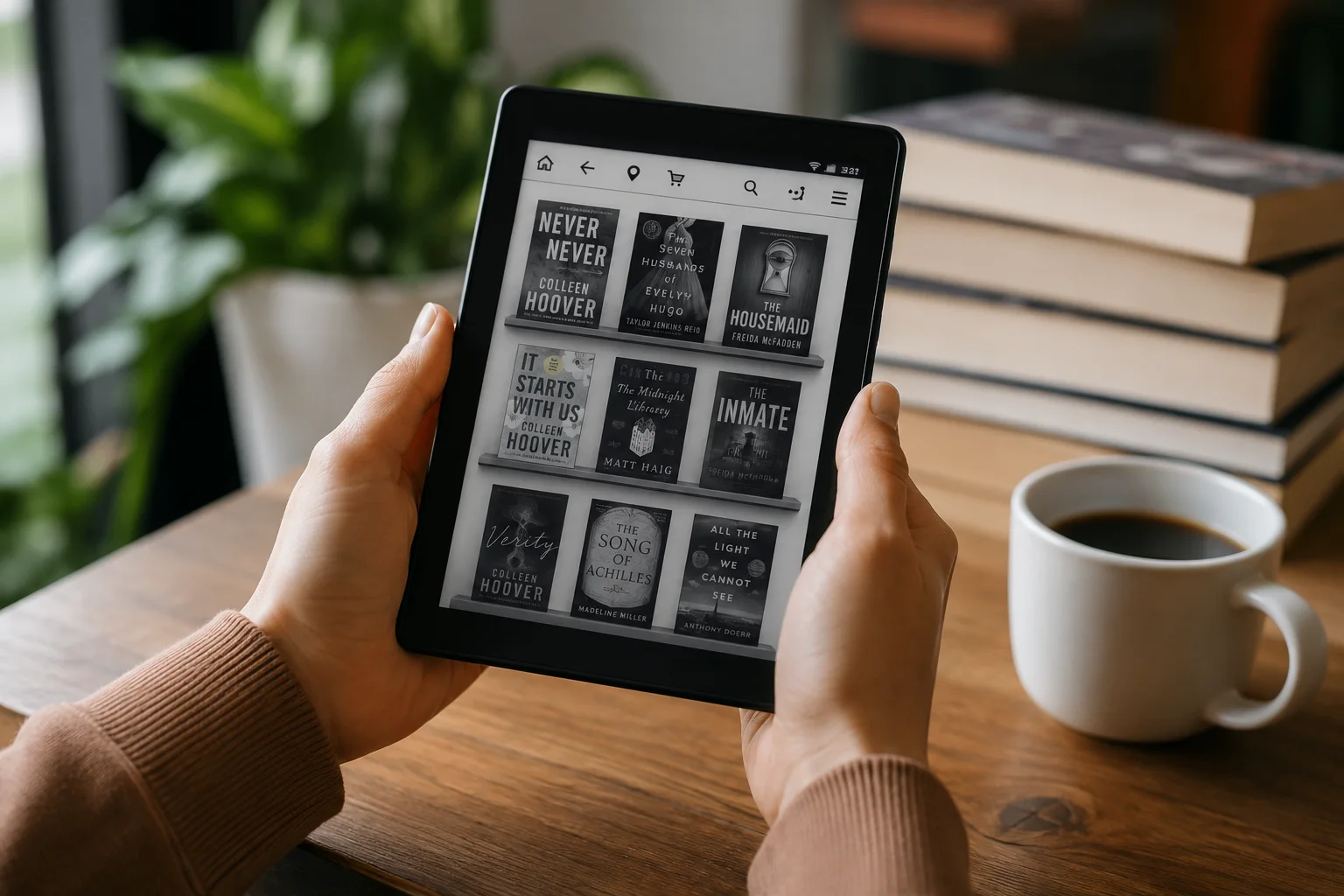
Every morning at midnight Pacific Time, Amazon swaps one ebook into the Kindle Daily Deal slot and drops its price to $1.99 or less for exactly 24 hours. The book sits at that price until the clock resets the following midnight. Then a different title takes its place. This has been happening every single day since Amazon launched the program in 2011. Over a decade of daily deals, 365 titles a year, each one hand-selected by Amazon's editorial team.
Most readers who use the Kindle Daily Deal know what it delivers: a book they'd normally pay $10 or $14 for, available for under $2, for one day. What they don't always know is how deliberately Amazon curates those selections, or why some books appear in the slot repeatedly while others never appear at all. And most authors who want their book featured have no idea how the selection actually works, what makes a title attractive to Amazon's editorial team, or what the realistic path to getting picked looks like.
This guide covers both perspectives: what readers actually get from the Kindle Daily Deal and how to find the best ones, and what authors need to understand about how selection works and what they can do to improve their chances.
|
$1.99 maximum price of a Kindle Daily Deal — down from an average retail price of $9.99 to $14.99 |
365 titles selected per year — one every day, chosen by Amazon's editorial team, not the algorithm |
50K+ readers search "Kindle daily deal" monthly — one of the highest-intent search terms in ebook discovery |
What the Kindle Daily Deal Actually Is
The Kindle Daily Deal is a curated promotional program, not an algorithm. This distinction matters. Most of Amazon's book discovery surfaces — the "Recommended for you" rows, the also-bought placements, the category bestseller lists — are driven entirely by data: sales velocity, reading completion rates, purchase overlap between users. The Kindle Daily Deal is different. Amazon employs a team of editors who select each day's deal title manually, based on a combination of editorial judgment, commercial considerations, and reader appeal.
Each deal runs for exactly 24 hours. The price is set at $1.99 or below for the deal period, regardless of the book's regular retail price. A novel that normally sells at $12.99 appears in the deal slot at $1.99. A book usually priced at $6.99 might appear at $0.99. Amazon absorbs the difference between the deal price and the royalty it would owe the author at full price — the author still earns their standard royalty percentage on the reduced sale price, not on the original price.
The deal is prominently featured in Amazon's Kindle store homepage, in the dedicated Kindle Deals section, in targeted email newsletters Amazon sends to subscribers who've expressed interest in reading, and in app notification banners for Kindle app users with deal alerts enabled. Visibility is Amazon-scale: millions of potential readers see the deal page every day.
There are also related programs running alongside the Daily Deal: the Kindle Monthly Deals (a rotating selection of titles available at discount for a full calendar month rather than 24 hours) and Kindle Countdown Deals (which authors set up themselves through KDP Select). All three are commonly searched under variations of "kindle deals" or "kindle daily deal today," but only the Kindle Daily Deal and Monthly Deals are fully Amazon-curated programs. The Countdown Deal is author-initiated and covered separately below.
How Readers Find and Use Kindle Deals
Active deal hunters — readers who make a habit of checking what's discounted each day — use three main discovery methods. The first is Amazon directly: the Kindle Deals page, accessible through the Kindle store navigation under "Special Offers," shows the current Daily Deal at the top of the page alongside Kindle Monthly Deals and other rotating promotions. Readers who check this page daily are specifically looking for quality books at reduced prices, which means their purchase intent is unusually high even by Kindle browsing standards.
The second method is email. Amazon sends daily deal notification emails to readers who've opted in, typically containing the day's featured title with its cover, a brief description, and the deal price alongside the original price. These emails have open rates well above typical marketing email benchmarks because readers opted in specifically to receive them and treat the email as a genuine recommendation rather than a promotional message.
The third method is third-party deal tracking. Several websites aggregate Kindle book deals daily and maintain their own subscriber lists. Written Word Media's Fussy Librarian and Freebooksy platforms reach millions of deal-seeking readers. BookBub's deal alert emails, organized by genre, reach over 10 million subscribers. When a Kindle Daily Deal title is also featured on these third-party platforms on the same day, the combined visibility can drive several thousand sales in a single 24-hour window.
This stacking effect — Amazon's own deal placement plus third-party deal newsletters on the same day — is what separates the books that generate 500 sales during a deal from the books that generate 5,000. The deal slot opens the door. External newsletter promotion pushes readers through it.
What Kinds of Books Amazon Picks for the Daily Deal
Amazon has never published a formal list of selection criteria for the Kindle Daily Deal. What's visible from patterns across thousands of selected titles over the years is consistent enough to describe with reasonable confidence.
Traditionally published titles dominate. The majority of Kindle Daily Deal selections come from major and mid-size traditional publishers. This isn't because Amazon discriminates against indie authors — it's because traditional publishers actively pitch their backlist titles to Amazon's editorial team, have established relationships with the program's editors, and routinely negotiate promotional arrangements that include deal slots as part of broader sales agreements. An indie author submitting a deal request competes in a much less organized way against publishers who have dedicated sales teams doing exactly this.
Backlist titles outperform new releases. The Kindle Daily Deal slot is disproportionately filled by books that have been published for at least six months to a year. A new release is more likely to appear in Amazon's "New and Notable" promotion than in the Daily Deal. The editorial team looks for titles with established review counts — typically 100 or more reviews — and proven reader engagement. A book that was a bestseller two years ago and has 400 reviews is a safer editorial bet than a debut novel with 20 reviews, even if the debut novel is objectively better written.
Genre fiction leads. Thriller, mystery, romance, and science fiction appear in the Daily Deal slot far more frequently than literary fiction, non-fiction, or memoir. The reader base for the deal program skews toward genre fiction readers who consume multiple books per month and who respond to deal pricing with higher purchase rates. A cozy mystery at $1.99 sells more copies during a deal window than a literary novel at the same price, and Amazon's editors know this from internal data.
Series starters and standalone crowd-pleasers. Books that function as entry points to a series appear in the deal slot regularly, because Amazon benefits from the downstream sales of subsequent series books at full price after a reader discovers the author through a deal. A reader who pays $1.99 for book one and then buys books two through five at $8.99 each is a highly profitable deal outcome. Standalone titles that appear in the deal slot tend to be titles with extremely broad reader appeal — the kind of book that people buy for everyone in their family.
How the Selection Process Works: What Actually Happens Behind the Scenes
Amazon's editorial team for the Kindle Daily Deal operates as a combination of inbound pitch review and outbound curation. The outbound side is simpler: Amazon editors monitor their own bestseller lists, review data, and reading engagement metrics to identify titles that are performing well and might drive strong deal sales. These are the books that sometimes get selected without any author or publisher initiative — Amazon noticed the title was doing well and decided to feature it.
The inbound side is where authors and publishers can participate. Traditional publishers submit deal pitches through established Amazon vendor relationships, typically proposing specific titles with supporting data: review counts, historical sales performance, comparable title benchmarks, and the publisher's own promotional commitment for the deal day. Amazon's editors evaluate these pitches and accept or decline based on how well the title fits the day's slot, the available deal pricing, and the editor's judgment about reader appeal.
Independent authors can submit deal requests directly through the KDP help system and through Amazon's Author Central. The submission asks for the book's ASIN, proposed deal price, requested deal date range, and a brief case for why the title would perform well as a deal. The response rate for indie submissions is lower than for publisher pitches, and the acceptance rate is lower still. But it's not zero. Indies who have books with 150 or more reviews, a track record of strong sales during past promotions, and a clear genre identity do get selected, particularly for less competitive weekday slots when major publisher pitches aren't filling the queue.
The realistic expectation: submitting a deal request for an indie title with 30 reviews and no promotional history is unlikely to succeed. Submitting a request for a title with 200 reviews, a documented bestseller badge in its subcategory, and a specific promotional plan for the deal day (meaning you'll be running your own email promotion simultaneously) gives the editor a reason to say yes. You're not just asking for Amazon's promotional machine. You're offering to contribute to it.
The Kindle Monthly Deals: The Easier-to-Access Alternative
Alongside the Daily Deal, Amazon runs Kindle Monthly Deals — a selection of roughly 100 titles discounted for an entire calendar month rather than 24 hours. The monthly deal selection is announced at the beginning of each month and promoted through Amazon's deal newsletters and in-store placement throughout the month.
Monthly Deals are more accessible to indie authors than the Daily Deal for one structural reason: the selection window is wider. Amazon needs to fill 100 slots per month rather than 365 individual day slots per year, and the per-slot competition is correspondingly lower. Authors who have been declined for Daily Deal slots have sometimes had success with Monthly Deal submissions for the same title, particularly in niche genre categories where Amazon needs content and major publisher pitches are fewer.
The monthly format also produces a different reader behavior than the daily format. Daily Deal buyers are motivated by the 24-hour urgency. Monthly Deal buyers are less urgency-driven and more discovery-driven — they find the title while browsing the monthly selection at some point during the month, often without knowing when in the month they saw it. The result is a more gradual sales curve across 30 days rather than a single-day spike. For authors tracking their BSR (Best Seller Rank) and trying to time the benefits of a deal, the monthly format is harder to plan around but produces more sustained rank elevation than the daily spike-and-decline pattern.
For Readers: How to Find the Best Kindle Deals Every Day
If you're a reader trying to find the best kindle deals consistently without spending an hour browsing every day, the most efficient approach is a combination of three sources that between them catch almost every meaningful deal across every genre.
Amazon's own daily deal email is the starting point. Sign in to Amazon, browse to your account email preferences, and opt into Kindle Daily Deal notifications. You'll receive one email per day with the featured title. Takes five seconds to scan. If the genre matches, click. If not, delete. The email contains the cover, the original price, the deal price, and a short description — enough to decide in ten seconds whether the book is worth $1.99.
BookBub deal alerts, organized by genre, are the most powerful supplementary source. BookBub operates the largest ebook deal newsletter in the English-language market, with genre-segmented lists that mean you only receive deals in the categories you care about. A thriller reader signed up for BookBub thriller alerts receives deals across all platforms — Amazon, Apple Books, Kobo — filtered to their exact genre preference. A day's kindle deals page might show one thriller. A BookBub thriller alert email might show five, including deals the daily page doesn't feature prominently.
Genre-specific Facebook groups and Reddit communities dedicated to book deals (r/FreeEBOOKS, r/KindleDeals) aggregate deals posted by community members in real time and often surface limited-time deals before they appear on the major newsletter lists. These communities are particularly useful for catching deals that sell out or expire early due to high demand.
Kindle Countdown Deals vs. Kindle Daily Deal: Understanding the Difference
These two programs share the word "deal" and both reduce a book's price temporarily, but they work completely differently and are often confused by both readers and authors.
The Kindle Countdown Deal is an author-initiated promotion available only to books enrolled in KDP Select. The author sets the discounted price and the duration (minimum one hour, maximum seven days) through their KDP dashboard. Amazon displays a countdown timer on the book's product page showing how many hours remain at the discounted price. No Amazon editorial approval is required. No pitch process. The author decides when to run it, at what price, and for how long, within the rules KDP Select allows.
The Kindle Daily Deal is an Amazon-curated program. Authors cannot set it up themselves. They can submit a request, but Amazon decides whether to accept it, when to run it, and at what price. The visibility the Daily Deal receives — homepage placement, email newsletter, app notifications — is orders of magnitude greater than a Countdown Deal running on its own. But the Countdown Deal is 100% in the author's control, and the Daily Deal is not.
For most indie authors, the practical promotion strategy is: run Countdown Deals regularly as a controlled, self-directed promotion tool, and submit a Daily Deal request once the book has enough reviews and sales history to make a credible editorial case. The Countdown Deal builds the sales history and review count that makes the Daily Deal request worth submitting. The programs complement rather than replace each other.
When running a Countdown Deal, coordinating it with an external email promotion — reaching genre readers who respond to time-limited price drops — produces meaningfully better results than running the deal on Amazon alone. KindleBookHub's email promotion service reaches genre-segmented readers specifically during limited-time deal windows, combining the urgency of the countdown timer with the reach of a targeted reader audience.
What a Kindle Daily Deal Actually Does for an Author's Numbers
The sales impact of a Kindle Daily Deal slot varies significantly based on the genre, the book's existing review count, the day of the week, and whether the author runs additional external promotion during the deal window. The range in actual author reports is wide: a modest deal on a quiet Tuesday in a niche genre might produce 300 to 500 additional sales. A high-profile deal on a weekend for a popular thriller with 500+ reviews and simultaneous BookBub and email newsletter placement can produce 5,000 to 10,000 sales in 24 hours.
The direct sales revenue at $1.99 (generating roughly $0.70 per copy at the 35% royalty rate for a book priced below $2.99) is often less financially significant than the indirect effects. The algorithmic effects of a major sales spike: the book's BSR improves dramatically during the deal, which places it visibly in bestseller lists it wouldn't normally reach. Readers browsing those lists see the book and buy it — at full price, after the deal ends — because the bestseller badge signals that other readers found it worth reading. This post-deal full-price "halo" effect is where the real revenue often comes from, and it can sustain elevated sales for two to four weeks after the deal day itself.
The review effects: a book that reaches 3,000 to 5,000 new readers in a single day will generate review activity for weeks afterward as those readers finish the book and post their feedback. For a book that was sitting at 80 reviews, a successful deal day can push it past 150 reviews within a month, which crosses a threshold where Amazon's recommendation algorithm begins placing the book more aggressively in also-bought and personalized recommendation rows.
These indirect effects — the halo sales, the review acceleration, the algorithmic attention — are why authors who've been selected for a Kindle Daily Deal often describe it as a turning point for a title rather than just a single good sales day. The deal day is the event. What it does to the book's algorithmic positioning is the lasting outcome.
Maximizing What You Get From a Deal Day: A Practical Checklist
Whether you're running a Countdown Deal you set up yourself or you've been selected for Amazon's Kindle Daily Deal, the same principles determine whether the deal day produces a spike you'll remember for a week or a genuine turning point for the book.
Book external promotion before the deal runs. Coordinating with genre-specific email newsletters — submitting your deal to services that reach readers actively looking for discounted books in your genre — should happen seven to ten days before the deal date, not the day of. Most high-reach services have submission deadlines. Missing the window means your deal runs with only Amazon's own visibility, which is significant but not as powerful as combined placement. KindleBookHub's deal promotion service is built specifically for this timing: genre-matched reader lists notified about your deal at the right moment, not blasted to a general audience with no genre filter.
Make sure the book page is conversion-ready before the deal runs. A reader who arrives at your book page during a deal is making a $1.99 decision, not a $9.99 one. The conversion barrier is lower. But low price alone doesn't overcome a weak cover, a description that buries the genre hook in paragraph three, or a review count that doesn't inspire confidence. Review your cover against the top sellers in your genre. Rewrite your description opening if it starts with backstory rather than emotional promise. You're about to send a large volume of traffic to that page — make sure the page is ready before the traffic arrives.
Notify your existing email list the morning the deal goes live. Your existing readers are your most loyal advocates. They'll buy the deal themselves, and more importantly, they'll share it. A reader who already loved your book and receives an email saying "my novel is $1.99 today" will forward that email, post about it, and tell their reading friends. This secondary distribution from existing fans is free amplification you can't buy directly.
Post on social media during the deal window, not just before it. Real-time social posts — "today only, $1.99" with the Amazon link — work during the deal window because urgency is genuine. A post that says "going on sale next Tuesday" creates no urgency. A post that says "ending in 6 hours" creates real urgency. Time your social posts to the middle and end of the deal day, not just the beginning.
Monitor BSR hourly during the deal and use the data afterward. Your Best Seller Rank during a deal day is the clearest measure you'll get of how effectively the promotion drove sales velocity. If your BSR peaked at #50 in your subcategory during the deal, that's a data point worth knowing when you plan the next promotion. If it peaked at #500, the promotion didn't drive enough volume to compete for top-category visibility, and you should evaluate which promotion channels underdelivered.
Planning a Kindle Deal? Reach Readers Who Are Already Looking
KindleBookHub sends your deal to genre-matched readers — thriller readers for thrillers, romance readers for romance — not a general audience. Submit 7 days before your deal date for maximum newsletter placement.
Why the Same Book Gets Picked Repeatedly and Others Never Do
Authors who've had one book selected for a Kindle Daily Deal often find themselves selected again for a subsequent title, sometimes within the same year. This pattern isn't coincidence. Amazon's editorial team tracks how selected titles performed: total units sold during the deal window, conversion rate from deal page views to purchases, post-deal sales trajectory, and reader feedback signals in the days following. A title that drove strong performance in all these metrics is a track record the editor can point to when evaluating future pitches from the same author or publisher.
The inverse is also true. A title that performed weakly during a deal slot — low conversion from the deal page, limited post-deal sales trajectory, poor reader signals — doesn't strengthen the case for future deals from that author. The selection team is making editorial bets. Past performance is the clearest evidence they have about where to place the next bet.
This is why the groundwork matters more than the pitch. An author who has built a book with a conversion-ready page, 150+ reviews, a clear genre identity, and a track record of responding positively to promotional events is fundamentally a better editorial bet than an author with a similar book but none of that infrastructure. The Daily Deal pitch is the last step. The years of book building that precede it are what actually determine whether the pitch succeeds.
Frequently Asked Questions
What time does the Kindle Daily Deal change?
The Kindle Daily Deal refreshes at midnight Pacific Time (3:00 AM Eastern, 8:00 AM GMT) every day. If you're watching for a specific deal or timing a purchase, the changeover happens at midnight PT. Amazon's deal page reflects the new title immediately at that time, though email notifications for the new deal typically arrive a few hours later in the morning.
Can indie authors apply to have their book featured in the Kindle Daily Deal?
Yes. Independent authors can submit a deal request through Amazon's KDP help system or through Author Central by contacting Amazon's editorial team with the book's ASIN and a proposed deal date range. Acceptance rates for indie submissions are lower than for major publisher pitches, but books with 100 or more reviews, a documented bestseller ranking in their subcategory, and a clear genre identity are considered seriously, particularly for weekday deal slots. The submission should include the book's review count, its best historical BSR, and any external promotional support the author plans to run on the deal day.
What is the difference between the Kindle Daily Deal and a Kindle Countdown Deal?
The Kindle Daily Deal is Amazon-curated and requires editorial selection — authors cannot set it up themselves. It runs for 24 hours on Amazon's featured deal pages with significant promotional visibility. A Kindle Countdown Deal is author-initiated and available to any KDP Select-enrolled book — no editorial approval required. The author sets the price, duration, and timing through their KDP dashboard. Countdown Deals display a timer on the book's product page but don't receive the homepage and email newsletter placement that the Daily Deal receives. Both are legitimate promotion tools; they serve different purposes and require different levels of author action.
How many books sell during a typical Kindle Daily Deal?
Sales volume during a Kindle Daily Deal varies widely. A niche genre title on a weekday with no external promotional support might sell 300 to 600 copies. A popular genre title on a weekend with simultaneous BookBub placement and genre newsletter promotion can sell 5,000 to 10,000 copies in 24 hours. The deal slot itself provides the visibility. External promotion to genre-specific reader audiences determines whether that visibility converts at the high end or the low end of the range.
Where can readers find the Kindle Daily Deal every day?
The Kindle Daily Deal is accessible through the Amazon Kindle store's "Special Offers" or "Kindle Deals" section, through daily email notifications (which readers can opt into through their Amazon account settings), and through the Kindle app's deals section. Third-party sites like BookBub, Fussy Librarian, and genre-specific Facebook reader groups also aggregate daily Kindle deals and can be useful for discovering deals across multiple categories simultaneously.
The One Thing Worth Knowing About Kindle Deals
The Kindle Daily Deal is a visibility machine. When Amazon runs a title through that slot, it's doing something no amount of author social media posting accomplishes: it's placing the book in front of readers who are actively looking for something to read today, with the price barrier reduced to the point where the decision to try an unfamiliar author costs less than a coffee.
The readers who buy deal books aren't charity shoppers. They're avid readers who use deal programs to expand their reading beyond their familiar authors, because $1.99 is low enough to take a chance on someone new. A thriller reader who discovers a new author through a deal and loves the book will buy everything that author has written at full price. That reader is worth far more than the $0.70 the deal copy earned.
For readers, the deal program is genuinely one of the best ways to discover fiction you might otherwise never find. For authors, getting featured in it — or building the review infrastructure and sales history that makes a deal submission credible — is a specific goal worth working toward systematically rather than hoping for as a windfall.
Start with a Countdown Deal. Run it with genre-targeted email promotion. Build the review count. Then, when the book has the track record that makes an editorial pitch credible, submit it. The path is clear. It just takes time and the right sequence of promotion decisions.
Related reading: KDP Select in 2026: Is It Worth It for Indie Authors?
Related reading: Kindle Library: How Readers Discover Books — An Author's Guide